Journey to the Ring

Jeff Nelligan • May 25, 2023

Along for every game of the way

THE SAN DIEGO UNION-TRIBUNE / COMMENTARY / JAN. 20, 2023 


Opinion: NCAA title rings cannot exceed $415 in value, but my son’s journey is worth much more

BY JEFF NELLIGAN 


Nelligan is a former San Diegan and the author of “Four Lessons from My Three Sons: How You Can Raise Resilient Kids.” He lives in Annapolis, Maryland, and can be reached at Jeff@ResilientSons.com.


America’s football nation grinds closer to college and pro playoffs, and after the 2023 College Football National Championship game and Super Bowl LVII, two select groups of players will receive a singular piece of jewelry, the championship ring. Far from an easily worn accessory, these rings are really miniature, hand-carried trophies and represent the pinnacle of athletic achievement.


Super Bowl rings feature up to 20 carats of white diamonds and can be worth up to $50,000 apiece. NCAA title rings cannot exceed $415 in value, per NCAA rules. Yet in size and design, they fit the hand-trophy ethos.


I know — I have one. It was available to all the parents of the U.S. Military Academy’s varsity rugby team, for whom my youngest son played, when it won a national championship this past May. It’s huge and gaudy and has all the traditional features of an NCAA title ring — “National Champions” in huge block letters, the date of triumph, a rugby ball, the player’s name, the school colors and crest — West Point’s black and gold sword and Athenian helmet — and something unusual: 19 black stars on each side of the ring, signifying the 19 former Army rugby players killed in action in conflicts around the globe.


For me, my son’s ring represents a panorama far beyond $415 worth of steel and zirconium. I’m like the 87 percent of American parents who have one or more kid playing organized sports: I know firsthand the youth athletic journey because I’ve been on it every game of the way.


The signposts remain vivid. It began with my son’s first game in organized sports: recreational soccer at the age of 4, which featured a disorganized bunch of kids happily running around a field, sometimes even chasing the ball. Seventh-grade basketball, where he learned to ride the bench. It hurt. It hurt him also.


Sophomore football and lacrosse practices on hot summer days where the artificial turf hit 110 degrees and those same fields in winter, where every hit was painfully magnified by the cold. The solitary hours swimming laps at the community pool; the hard clack of weight machines in airless gyms and miles of running through our neighborhood. 60 million American kids play organized sports and each one of them knows something about this grind.


Moreover, a big part of the athletic journey is the journey, as every parent knows. It’s driving to numberless practices and the family treks across four states to tournaments and college recruiting camps. I did this with all three of my sons (the two eldest also played college sports) and can’t recall but will never forget our long conversations about anything and everything. The long afternoons sitting on wooden bleachers, cheering and wincing, as exhausted with emotion and nerves as whatever son was on playing on the field. The wins, the losses, being on both sides of blowouts, the nerve-wracking contests for league championships and the struggles to remain out of last place.


There was also the escalation in seriousness; it’s truly fun to walk the sidelines of a sixth-grade lacrosse game, chatting and laughing with other parents. By 11th grade, you’re up in those forlorn bleachers and on edge as the sidelines are now filled with scowling college coaches and your son is in their crosshairs.


Throughout it all, every moment, practice and game, I was fortunate to see my three sons acquire the solid character that competitive sports nurtures: resilience in handling pressure, the tight camaraderie of a team, the grinding discipline of working to get bigger, faster, stronger.


At last, it all comes together — the long, grueling journey beginning with a 4-year-old child prancing around on a soccer field ends with a young man bursting out of a stadium tunnel to win it on all on the national collegiate stage.


After his last game, I spent the evening in a typically crazy Dad endeavor: I meticulously added up all the contests in all sports in which my son had played since his recreational soccer debut. My foggy estimate: 1,227 games.


The irony is that despite my pride in his accomplishments, I have worn the ring only several times in public. It’s so large and garish, and I feel self-conscious that I didn’t earn it. But as a father, I earned something better — I was along for the entire journey.

#####


ABOUT THE BOOK

Every Dad in America wants to raise a resilient kid. Four Lessons from My Three Sons charts the course.  

Written by a good-natured but unyielding father, this slim volume describes how his off-beat and yet powerful forms of encouragement helped his sons obtain the assurance, strength and integrity needed to achieve personal success and satisfaction. This book isn't 300 pages of pop child psychology or a fatherhood "journey" filled with jargon and equivocation. It's tough and hard and fast. It’s about how three boys made their way to the U.S. Naval Academy, Williams, and West Point – and beyond.
GET THE BOOK NOW
By Jeff Nelligan April 8, 2026
He discusses his inspiration for satire and the enduring appeal of “Animal House.”
By Jeff Nelligan March 31, 2026
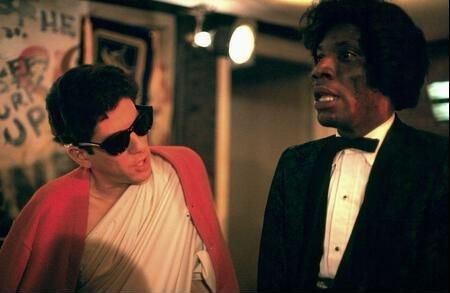
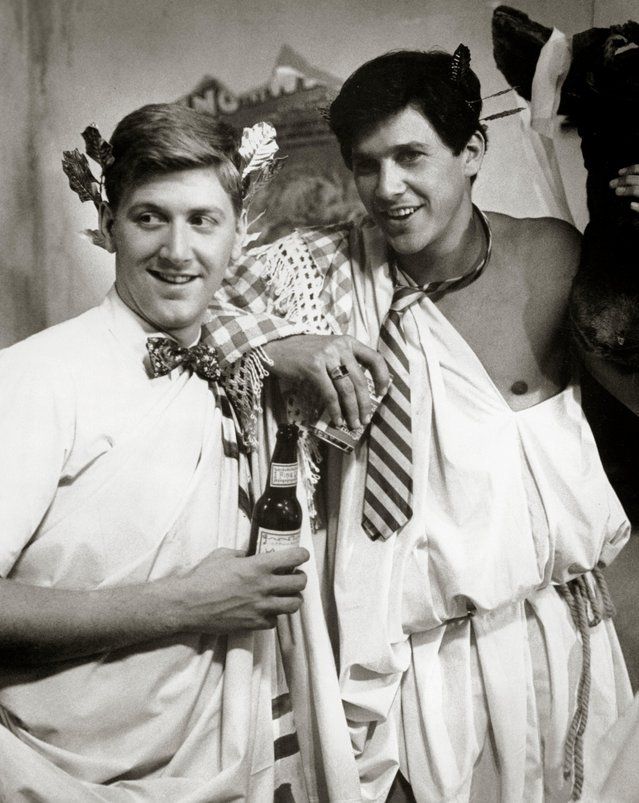
We begin at the very beginning. Where else? It’s an early autumn evening and two excited freshmen saunter under the swaying elms lining the Faber College quad. It’s fraternity Pledge week and Larry Kroger and Kent Dorfman are on their way, theoretically, to meet new friends and share cheerful bonhomie, forge lifelong bonds and celebrate virtuous brotherhood all around. Nothing could be further from the truth. These two pilgrims are actually beginning a Homeric Odyssey of the Innocents through the Faber Greek system, at the end of which they will emerge…but hey, let’s not get ahead of ourselves. Now, imagine holding to your eyes a kaleidoscope displaying an array of shifting scenes following our unwitting frosh duo, who serve as the chief catalysts of the film. Along with other chief catalysts. Who are they? Let’s find out. ______________________ “I, state your name…” Up the steps of a fashionable residence they stroll and a door opens into the Nietzschean hell of Omega Theta Pi. “Hi there, Doug Neidermeyer. Omega Membership Chairman.”  This wonderfully patronizing voice foreshadows the rocky road ahead for our heroes. While sneering at Larry, Neidermeyer shuts the door on Kent’s head. Moments later, Omega Name Tag Hostesses Mandy Pepperidge and Babs Jansen cruelly take stock of the two, the latter voicing the endearing line that adorns this chapter. Forcefully guiding them away from the white Anglo-Saxon super-race of winners in the main room, our Membership Chairman delivers Larry and Kent to the nearby Third World sitting room where overt racism, antisemitism and ableism reach an instant and shocking peak. “Hi there fellas,” says Neidermeyer to the room’s hapless occupants, “I’d like you to meet Ken and Lonnie. Ken, Lonnie, let me introduce you to Mohammad, Jugdish, Sidney and Clayton.” Baleful stares emanate from the unfortunate trio on the couch and the inhabitant of the adjoining wheelchair. Then with his sphinxlike smile Neidermeyer adds, “Now, just grab yourselves a seat and make yourselves at home.” He forcefully pushes Lonnie onto the couch and then pats the corpulent Ken on the stomach while uttering one of the most vicious lines of the film: “And don’t be shy about helping yourself to the punch and cookies.” Spine-tingling action presaging the epic battles to come. Indeed, you can almost see the blind and crippled Clayton come to life. But hold on. Kent escapes this obvious trap to wander into the A-Listers piano lounge where Omega President Greg Marmalard, regency pipe in hand, holds forth to future shock trooper Chip Diller. Let’s listen in: “Now I’m not going to say Omega is the best house on campus. But a lot of outstanding guys figure they’ll pledge Omega or they won’t pledge at all. We do have more than our fair share of campus leaders. Something that never looks bad on your permanent record, Chip.” A pushy Chip Diller replies smarmily, “Well sure, everyone I talk to says Omega house is the best but…” Here Chip pauses and then continues, “I hate to seem you know, pushy…” Marmalard breaks in knowingly. “Let the unacceptable candidates worry about that because after tonight – “ Suddenly a sweaty Dorfman lurches into view next to Chip and Greg concludes “…there you are.” Oozing a mixture of insincerity and guile, Marmalard doesn’t miss a beat. He politely introduces Kent to Mandy Pepperidge and Chip, “…and over there is Terry Arbock, captain of the swim team, and that’s Carl Philips, editor of the Daily Faberian. And over here…” Marmalard skillfully steers him back to the land of the misfit toys “…is Clayton, Sidney, Jugless, Muhammad, Lonnie.” “We already met,” says Kent dolefully. “Ah, super! Then you’ll have plenty to talk about!” We have glimpsed our pure anti-heroes, Doug and Greg, and the percolating evil of Omega House in just 53 seconds. Are the battle lines drawn in this epic? Not quite yet, but the pencils are being sharpened. Shaking themselves free of the obvious Omega winners, Larry and Kent are outside again trudging onwards while the latter takes aim at his comrade’s pessimism. “I don’t think you’re trying very hard,” Dorfman says in exasperation. But he finds solace as they approach the known fraternity next door inasmuch as his brother was a Delta. “They gotta take me. It’s like their law. Don’t worry, Larry. I’ll put in a good word for you.” Moments later, in what some scholars call the most riveting scene in the film, Bluto urinates on their shoes. Another kaleidoscope of images bombards us from which there is no turning away. Because here we have another door opened - again that crafty symbolism! – and Delta Tau Chi is revealed to our nascent pledges. It’s a world of absolute mayhem (some use the word “symbolic” as a contrast to the hushed tones of the uptight Omega tea party). The squalid dwelling’s walls are covered in graffiti and cheesy posters and stolen road signs, loud music (a contrapuntal to the Liberace next door) and deafening conversation, beer bottles explode in every room and soon a motorcycle* breaks through the front door and is driven up the stairs to the second floor. Kent interrupts a high-stakes card game and Larry gazes at the breasts of a water-filled mermaid. ____________________ Author’s note: Carefully perceive here how the maudlin “coming of age” youth syndrome, normally years in the making in American life, is compressed into mere moments in this film. Striking. _____________________ Dorfman is soon introduced by Delta Tau Chi President Robert Hoover to Delta Rush Chairman Eric Stratton and his sidekick, Donald “Boon” Schoenstein. “Ken’s a legacy, Otter” says Hoover earnestly, “His brother Fred was a ’59.” Flounder helpfully interjects. “He says legacies usually get asked to pledge automatically.” Otter responds. “Oh well, usually. Unless the pledge in question turns out to be a real closet case. Like Fred.” Flounder gasps, “My brother!” Consider: Within five minutes the entire cast – minus one – is introduced. How do the screenwriters do it? Good question. Let’s fast forward because we can. At the official Delta Tau Chi Membership Meeting photos of Larry and Kent are projected by a slide projector on a beer-soaked bedsheet, provoking derisive cries of outrage and the heaving of empties. But as one savvy brother observes, Delta needs the dues. It is here we are witness to a unicorn moment which has escaped previous scholars and maybe even my esteemed readers. Dorfman’s pathos-ridden mugshot is shown, prompting Otter to rise to his feet to address his Delta brethren and defend Kent’s obvious unsuitability for any fraternity any where. This is the sole moment of kindly grace we see will see from Otter in the entire film. Noteworthy, but fleeting. In the seeming next moment, Hoover is wearing pajama bottoms, a Santa Claus jacket and a Viking horned helmet and initiating the pledges with the sacred Delta oath. In between belches, Sergeant-at-Arms Bluto majestically reveals their brotherhood identities, which is followed by the obligatory fraternity bonding scene: beer suds flying in the air and drunk young men dancing together and butchering the lyrics of culturally appropriated music....
By Jeff Nelligan March 20, 2026
Emile Faber, President of Faber College - 1904
By Jeff Nelligan January 29, 2026
It's 8:30 a.m. on a humid August Tuesday and I’m on the roof of the U.S. Capitol, the Dome rising 280 feet directly above. In my arms is a stack of thin boxes and I’m navigating a plywood gangplank leading to a rusted 15-foot flagpole. A colleague joins me carrying more boxes. She opens one and hands me a 2’ by 4’ American flag which I affix to the pole’s lanyard, raise and lower quickly, unfasten and hand to her as she hands me another. A third colleague brings out more boxes and retrieves the ones containing flown flags. This little dance continues for three straight hours. Afterwards, my colleagues and I carefully re-fold each flag and affix to it a “Certificate of Authenticity from the Architect of the Capitol” reading “This flag was flown over the U.S. Capitol in honor of____” and fill in the blank: “The Greater Bakersfield, California Chamber of Commerce”…the 80 th birthday of Wilbert Robinson of Bowie, Maryland, proud veteran of the Vietnam War…” We will perform this task for five days a week until Congress returns from recess. This is my very first job in Washington, D.C. and obviously, I have what it takes. *** Flag duty began my 32-year run in politics and government, which ended last week. It included four tours of duty on Capitol Hill working for three Members of Congress, two Presidential appointments serving Cabinet officers in the Departments of State and Health and Human Services, posts at two independent agencies, and a career position at FDA. The jobs were a mix of purely political positions where being on the south side of an election meant cleaning out your desk and getting good at catchy LinkedIn posts – twice that happened - and career federal government stints where the stakes were less exhilarating. *** I worked principally as press secretary and special assistant. The former job, a common D.C. occupation, was transformed in 2008 with the onset of social media, morphing from daily pronouncements of your boss’s wisdom on the issues of the day to rapid-fire postings on the obvious unreasonableness, even cruelties of your opponents. Sound familiar? As for the latter occupational specialty, special assistant, the terms ‘bagman’ or ‘fixer’ are more apt: A guy always two steps behind the principal but always ready to step up and fix whatever problem arose in daily political life. Need a special vegan lunch for Congressman Busybody, White House tour tickets for the Big Bad High volleyball team, or the personal phone number of the executive assistant to a heavy-duty lobbyist? I was your guy. Every leader needs a fixer. Like anyone else who works in D.C., I occasionally participated in a glam political moment – you know, that unique, epic event that would never ever be forgotten in D.C. history Until it was. *** The best part about government life was working for many men and women who were at the top of their game in the D.C. Swamp, one of the toughest arenas on the planet. Their success, from the vantage point of your humble correspondent, was attributable to four simple rules of life. “If you can’t measure it, it didn’t happen.” Every office I was in kept metrics on virtually every aspect of the principal’s week – how many meetings and events attended, X posts, interviews, committee votes, constituent letters, action items completed from memos?! Numbers, numbers, and always keeping score – and always the quest to improve. “Never lose it.” In a lifetime of political jobs, I may have heard a boss raise her or his voice half a dozen times, even during and after major-league setbacks. Self-control was their hallmark. One boss, a powerful House Committee chairman once confided to me, “I’m fine that 80 precent of my job is humoring these guys, no matter how crazy they get.” An equally valuable corollary skill: Humility. The ability of these individuals to admit to colleagues and staff when wrong on a particular issue. Which counterintuitively only upped their long-term credibility. “Something’s always gonna go south.” Always the need for a plan C. Every initiative during an upcoming day was scoured for what elements would interfere and how, if they occurred, they could be ameliorated. Hence, in the rare times when things did go south, there was always preparation in advance for getting to 80 percent of what was needed. “Good is not good enough.” Successful politicians and government leaders – and their staffs – never get complacent. If they do, they’re not long for the Swamp. Everyone is always hustling for the edge. A useful corollary learned from an NCO when I was in the Army: Always have your hand up. Volunteering is at the heart of the hustle, the cheerful willingness to take on the new and unknown and do whatever it takes. *** And that’s how it all started. On the second day of my first congressional tour the Member solicited volunteers “for a fun recess job that’ll get you out of the office.” It was flag duty and from that day onwards my government career could only go up. *****
By Jeff Nelligan September 10, 2025
It's all about the hustle and grind
By Jeff Nelligan September 6, 2025
Three easy acts to help develop your child's character
By Jeff Nelligan June 14, 2025
The Social Media Contract
By Jeff Nelligan June 1, 2025
Prove me right.
By Jeff Nelligan May 8, 2025
The key parent and kid marker
By Jeff Nelligan February 2, 2025
Musing on the practical wisdom of Four Lessons from My Three Sons