Always reach further

Jeff Nelligan • June 23, 2024

“All these good guys are sitting in these office buildings, staring at screens and wondering, ‘What in the hell am I doing here?’”

I’ve been fortunate to have had a number of exciting jobs in

Washington, D.C.: A staffer for three Members of Congress on

Capitol Hill, a special assistant to senior Cabinet members in the

Executive branch, and an advance man on numerous nationwide

political campaigns.


These posts required a minimum of desk

time mutely staring at a screen and a maximum of time in

action, always two steps behind politicians at work in

Washington, D.C. and in their travel all over the nation and the

world.


But even with the glam and excitement, politics is an erratic

game; if you’re not winning, you’re losing and that means

getting fired when your guy is on the south side of an election.

All which led me to find secure work and a stable schedule so as

to be around during my sons’ pre-teen and teenage years.


All of which is to say (and maybe you know this from your own

experience), I know well of what a desk job often consists: The

day-to-day mild drudgery, the relent- less emails and ensuing

chaotic email chains that stretch into oblivion; the routine

meetings - yes, with Wayne and his Ad-hoc Compliance Team

and Stephanie and her self-styled merry band of “Budgeteers!”;

the meticulous track changes in “urgent!” documents that

languish and un-urgently disappear forever; teleconferences and

Zoom calls where dogs bark in the background and someone is

always chewing their lunch out loud.


Hey, I’m no self- pitying martyr; I’m grateful for my job and my colleagues. I dearly

appreciate my regular paycheck because – and I admit this freely

- I know better than you what it’s like not to get that paycheck.

If I wanted one thing for my boys - just one thing - I wanted my

three sons to soar way beyond my endgame resulting in this

commonplace career. I wanted them pursuing a path that led to

exciting endeavors, jobs packed with responsibility, positions

requiring leadership and risk and real rewards.


This was the path on which they were set forth by all that you’ve

read up to now. Middle school and high school were proving

grounds and now it was vital that they approach college and

beyond with imagination and vision. One way I made that

happen, as with the section above, was to show them the dismal

alternatives.

_______________


What with school and athletic and family responsibilities, we

were an active bunch and often we’d be driving through the

nation’s Capital and suburbs throughout the metropolitan area

for all sorts of events and errands. Throughout all these miles of

varied travel, there was only one thing that stayed static: Office

buildings. From one-story to 30 stories, from low-slung brick

pillboxes in office parks to tall concrete and steel monoliths

lined up for blocks, the landscape was uniform and ever-present.

In a funny way, I’ve always thought office buildings, no matter

where or what size, had a kind of brooding feel (just look at the building
in the photo above - positively evil). Hulking

buildings covered from street level to the clouds with

anonymous windows; the gathering point for dozens and

thousands of individuals brought together from the points of the

compass to one single place at a designated time to dig in and

work. (Of course, that is changing now.)


It was one weekend afternoon after a school field trip when it

occurred to me that I could make a point larger than even what

was before our eyes.


“Boys, I want you to notice something,” I said as we drove

down a thoroughfare featuring suburban office parks in

Montgomery County, Maryland. “Check out all these office

buildings. We pretty much see them everywhere we go, all kinds

of sizes.” The boys obligingly looked out the car windows. “Let

me tell you, I’ve worked in these kinds of places and you want

to know a secret about them?” They swung their heads towards

me in expectation; of course I had them.


“Here it is: Behind every window up there is some guy sitting at

a desk with a computer screen in front of him. He’s got a

Redskins coffee mug, a clay pencil holder like the one you made

me in 2nd grade and a photo of his family on the wall. He’s like

about every other guy in that building. At one time, he had some

big dreams about what he wanted to do with his life. He had a

great football career at Landon and was going to play in college,

he was going to make a ton of money in his cousin’s business or

be a Wall Street guy or invent a video game like Madden or sail

around the world or own a restaurant or be a jet pilot. But he’s

not doing that. None of those guys are.”


They looked at me quizzically and the middle kid asked the

obvious, “Then what are they doing?” I paused for effect. “I’ll

tell you what they’re doing. All these good guys are sitting in

these stupid office buildings, staring at screens and wondering,

‘What in the hell am I doing here?’”


The boys laughed at the phrase, a typical Dad utterance. Then I

added, “It’s not that they’re sad or anything. It’s that they

wanted a lot more and somehow didn’t get it.” I knew there was

a faint glimmer of understanding in what I’d said.

We kept driving through the sprawl. The colorless buildings

with their reflected walls of glass, the oceans of empty asphalt

parking lots, the desolation – all of it outlines the gloom pretty

well for a 12-year-old and even an 8-year-old. It did for me.


I went on. “Let me tell you, you don’t want to grow up to be that

office building guy - that guy who had real talent and real drive

and maybe had a good few years but ended up as just another

Joe sitting in front of a screen.” And then the clincher: “I work

in one those boring places and I’m one of those guys. And I’m

telling you, you always need to reach a lot further than me.”

It doesn’t get more honest than that.


The key point here is that it was imperative that my three sons

soar far, far beyond the type of aspiration of landing a nice job

with its unending routine and monotony and incremental

advancement. I was acutely focused, as this entire book

demonstrates, on developing within them the vision to work

hard, discern how to operate in unknown circumstances, play by

the rules, take chances and look long and select a career with

excitement, adventure, and big-time compensation, even if there

was occasional big- time risk.


Thankfully, all three sons are on that path today.


ABOUT THE BOOK

Every Dad in America wants to raise a resilient kid. Four Lessons from My Three Sons charts the course.  

Written by a good-natured but unyielding father, this slim volume describes how his off-beat and yet powerful forms of encouragement helped his sons obtain the assurance, strength and integrity needed to achieve personal success and satisfaction. This book isn't 300 pages of pop child psychology or a fatherhood "journey" filled with jargon and equivocation. It's tough and hard and fast. It’s about how three boys made their way to the U.S. Naval Academy, Williams, and West Point – and beyond.
GET THE BOOK NOW
By Jeff Nelligan April 29, 2026
Welcome future Justice Warriors!
By Jeff Nelligan April 21, 2026
The most complex character in American cinematic history.
By Jeff Nelligan April 15, 2026
Douglas C. Neidermeyer, Membership Chairman, Omega Theta Pi
By Jeff Nelligan April 8, 2026
He discusses his inspiration for satire and the enduring appeal of “Animal House.”
By Jeff Nelligan March 31, 2026
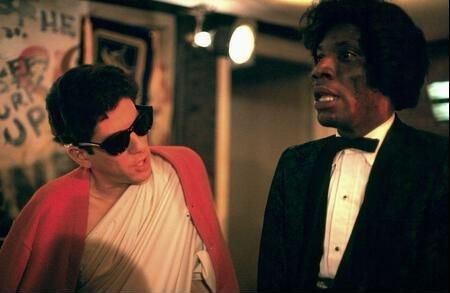
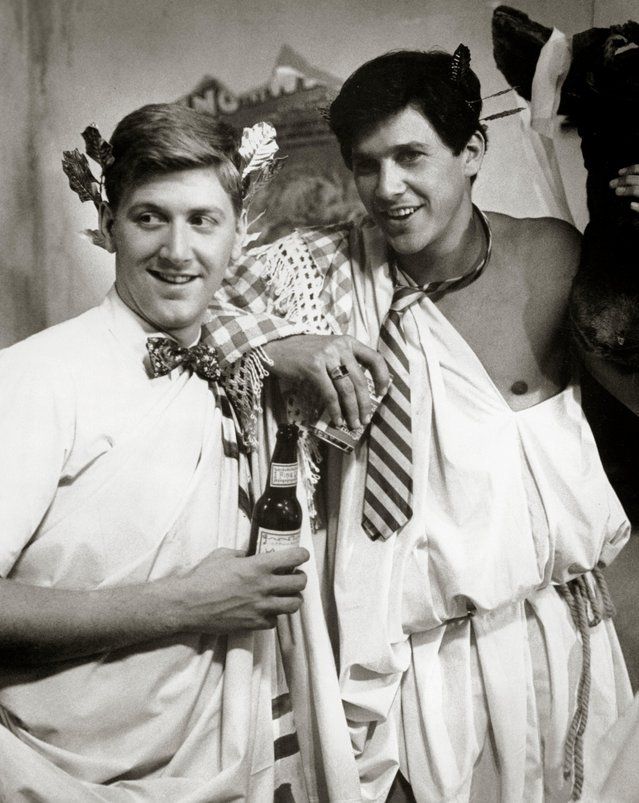
We begin at the very beginning. Where else? It’s an early autumn evening and two excited freshmen saunter under the swaying elms lining the Faber College quad. It’s fraternity Pledge week and Larry Kroger and Kent Dorfman are on their way, theoretically, to meet new friends and share cheerful bonhomie, forge lifelong bonds and celebrate virtuous brotherhood all around. Nothing could be further from the truth. These two pilgrims are actually beginning a Homeric Odyssey of the Innocents through the Faber Greek system, at the end of which they will emerge…but hey, let’s not get ahead of ourselves. Now, imagine holding to your eyes a kaleidoscope displaying an array of shifting scenes following our unwitting frosh duo, who serve as the chief catalysts of the film. Along with other chief catalysts. Who are they? Let’s find out. ______________________ “I, state your name…” Up the steps of a fashionable residence they stroll and a door opens into the Nietzschean hell of Omega Theta Pi. “Hi there, Doug Neidermeyer. Omega Membership Chairman.”  This wonderfully patronizing voice foreshadows the rocky road ahead for our heroes. While sneering at Larry, Neidermeyer shuts the door on Kent’s head. Moments later, Omega Name Tag Hostesses Mandy Pepperidge and Babs Jansen cruelly take stock of the two, the latter voicing the endearing line that adorns this chapter. Forcefully guiding them away from the white Anglo-Saxon super-race of winners in the main room, our Membership Chairman delivers Larry and Kent to the nearby Third World sitting room where overt racism, antisemitism and ableism reach an instant and shocking peak. “Hi there fellas,” says Neidermeyer to the room’s hapless occupants, “I’d like you to meet Ken and Lonnie. Ken, Lonnie, let me introduce you to Mohammad, Jugdish, Sidney and Clayton.” Baleful stares emanate from the unfortunate trio on the couch and the inhabitant of the adjoining wheelchair. Then with his sphinxlike smile Neidermeyer adds, “Now, just grab yourselves a seat and make yourselves at home.” He forcefully pushes Lonnie onto the couch and then pats the corpulent Ken on the stomach while uttering one of the most vicious lines of the film: “And don’t be shy about helping yourself to the punch and cookies.” Spine-tingling action presaging the epic battles to come. Indeed, you can almost see the blind and crippled Clayton come to life. But hold on. Kent escapes this obvious trap to wander into the A-Listers piano lounge where Omega President Greg Marmalard, regency pipe in hand, holds forth to future shock trooper Chip Diller. Let’s listen in: “Now I’m not going to say Omega is the best house on campus. But a lot of outstanding guys figure they’ll pledge Omega or they won’t pledge at all. We do have more than our fair share of campus leaders. Something that never looks bad on your permanent record, Chip.” A pushy Chip Diller replies smarmily, “Well sure, everyone I talk to says Omega house is the best but…” Here Chip pauses and then continues, “I hate to seem you know, pushy…” Marmalard breaks in knowingly. “Let the unacceptable candidates worry about that because after tonight – “ Suddenly a sweaty Dorfman lurches into view next to Chip and Greg concludes “…there you are.” Oozing a mixture of insincerity and guile, Marmalard doesn’t miss a beat. He politely introduces Kent to Mandy Pepperidge and Chip, “…and over there is Terry Arbock, captain of the swim team, and that’s Carl Philips, editor of the Daily Faberian. And over here…” Marmalard skillfully steers him back to the land of the misfit toys “…is Clayton, Sidney, Jugless, Muhammad, Lonnie.” “We already met,” says Kent dolefully. “Ah, super! Then you’ll have plenty to talk about!” We have glimpsed our pure anti-heroes, Doug and Greg, and the percolating evil of Omega House in just 53 seconds. Are the battle lines drawn in this epic? Not quite yet, but the pencils are being sharpened. Shaking themselves free of the obvious Omega winners, Larry and Kent are outside again trudging onwards while the latter takes aim at his comrade’s pessimism. “I don’t think you’re trying very hard,” Dorfman says in exasperation. But he finds solace as they approach the known fraternity next door inasmuch as his brother was a Delta. “They gotta take me. It’s like their law. Don’t worry, Larry. I’ll put in a good word for you.” Moments later, in what some scholars call the most riveting scene in the film, Bluto urinates on their shoes. Another kaleidoscope of images bombards us from which there is no turning away. Because here we have another door opened - again that crafty symbolism! – and Delta Tau Chi is revealed to our nascent pledges. It’s a world of absolute mayhem (some use the word “symbolic” as a contrast to the hushed tones of the uptight Omega tea party). The squalid dwelling’s walls are covered in graffiti and cheesy posters and stolen road signs, loud music (a contrapuntal to the Liberace next door) and deafening conversation, beer bottles explode in every room and soon a motorcycle* breaks through the front door and is driven up the stairs to the second floor. Kent interrupts a high-stakes card game and Larry gazes at the breasts of a water-filled mermaid. ____________________ Author’s note: Carefully perceive here how the maudlin “coming of age” youth syndrome, normally years in the making in American life, is compressed into mere moments in this film. Striking. _____________________ Dorfman is soon introduced by Delta Tau Chi President Robert Hoover to Delta Rush Chairman Eric Stratton and his sidekick, Donald “Boon” Schoenstein. “Ken’s a legacy, Otter” says Hoover earnestly, “His brother Fred was a ’59.” Flounder helpfully interjects. “He says legacies usually get asked to pledge automatically.” Otter responds. “Oh well, usually. Unless the pledge in question turns out to be a real closet case. Like Fred.” Flounder gasps, “My brother!” Consider: Within five minutes the entire cast – minus one – is introduced. How do the screenwriters do it? Good question. Let’s fast forward because we can. At the official Delta Tau Chi Membership Meeting photos of Larry and Kent are projected by a slide projector on a beer-soaked bedsheet, provoking derisive cries of outrage and the heaving of empties. But as one savvy brother observes, Delta needs the dues. It is here we are witness to a unicorn moment which has escaped previous scholars and maybe even my esteemed readers. Dorfman’s pathos-ridden mugshot is shown, prompting Otter to rise to his feet to address his Delta brethren and defend Kent’s obvious unsuitability for any fraternity any where. This is the sole moment of kindly grace we see will see from Otter in the entire film. Noteworthy, but fleeting. In the seeming next moment, Hoover is wearing pajama bottoms, a Santa Claus jacket and a Viking horned helmet and initiating the pledges with the sacred Delta oath. In between belches, Sergeant-at-Arms Bluto majestically reveals their brotherhood identities, which is followed by the obligatory fraternity bonding scene: beer suds flying in the air and drunk young men dancing together and butchering the lyrics of culturally appropriated music....
By Jeff Nelligan March 20, 2026
Emile Faber, President of Faber College - 1904
By Jeff Nelligan January 29, 2026
It's 8:30 a.m. on a humid August Tuesday and I’m on the roof of the U.S. Capitol, the Dome rising 280 feet directly above. In my arms is a stack of thin boxes and I’m navigating a plywood gangplank leading to a rusted 15-foot flagpole. A colleague joins me carrying more boxes. She opens one and hands me a 2’ by 4’ American flag which I affix to the pole’s lanyard, raise and lower quickly, unfasten and hand to her as she hands me another. A third colleague brings out more boxes and retrieves the ones containing flown flags. This little dance continues for three straight hours. Afterwards, my colleagues and I carefully re-fold each flag and affix to it a “Certificate of Authenticity from the Architect of the Capitol” reading “This flag was flown over the U.S. Capitol in honor of____” and fill in the blank: “The Greater Bakersfield, California Chamber of Commerce”…the 80 th birthday of Wilbert Robinson of Bowie, Maryland, proud veteran of the Vietnam War…” We will perform this task for five days a week until Congress returns from recess. This is my very first job in Washington, D.C. and obviously, I have what it takes. *** Flag duty began my 32-year run in politics and government, which ended last week. It included four tours of duty on Capitol Hill working for three Members of Congress, two Presidential appointments serving Cabinet officers in the Departments of State and Health and Human Services, posts at two independent agencies, and a career position at FDA. The jobs were a mix of purely political positions where being on the south side of an election meant cleaning out your desk and getting good at catchy LinkedIn posts – twice that happened - and career federal government stints where the stakes were less exhilarating. *** I worked principally as press secretary and special assistant. The former job, a common D.C. occupation, was transformed in 2008 with the onset of social media, morphing from daily pronouncements of your boss’s wisdom on the issues of the day to rapid-fire postings on the obvious unreasonableness, even cruelties of your opponents. Sound familiar? As for the latter occupational specialty, special assistant, the terms ‘bagman’ or ‘fixer’ are more apt: A guy always two steps behind the principal but always ready to step up and fix whatever problem arose in daily political life. Need a special vegan lunch for Congressman Busybody, White House tour tickets for the Big Bad High volleyball team, or the personal phone number of the executive assistant to a heavy-duty lobbyist? I was your guy. Every leader needs a fixer. Like anyone else who works in D.C., I occasionally participated in a glam political moment – you know, that unique, epic event that would never ever be forgotten in D.C. history Until it was. *** The best part about government life was working for many men and women who were at the top of their game in the D.C. Swamp, one of the toughest arenas on the planet. Their success, from the vantage point of your humble correspondent, was attributable to four simple rules of life. “If you can’t measure it, it didn’t happen.” Every office I was in kept metrics on virtually every aspect of the principal’s week – how many meetings and events attended, X posts, interviews, committee votes, constituent letters, action items completed from memos?! Numbers, numbers, and always keeping score – and always the quest to improve. “Never lose it.” In a lifetime of political jobs, I may have heard a boss raise her or his voice half a dozen times, even during and after major-league setbacks. Self-control was their hallmark. One boss, a powerful House Committee chairman once confided to me, “I’m fine that 80 precent of my job is humoring these guys, no matter how crazy they get.” An equally valuable corollary skill: Humility. The ability of these individuals to admit to colleagues and staff when wrong on a particular issue. Which counterintuitively only upped their long-term credibility. “Something’s always gonna go south.” Always the need for a plan C. Every initiative during an upcoming day was scoured for what elements would interfere and how, if they occurred, they could be ameliorated. Hence, in the rare times when things did go south, there was always preparation in advance for getting to 80 percent of what was needed. “Good is not good enough.” Successful politicians and government leaders – and their staffs – never get complacent. If they do, they’re not long for the Swamp. Everyone is always hustling for the edge. A useful corollary learned from an NCO when I was in the Army: Always have your hand up. Volunteering is at the heart of the hustle, the cheerful willingness to take on the new and unknown and do whatever it takes. *** And that’s how it all started. On the second day of my first congressional tour the Member solicited volunteers “for a fun recess job that’ll get you out of the office.” It was flag duty and from that day onwards my government career could only go up. *****
By Jeff Nelligan September 10, 2025
It's all about the hustle and grind
By Jeff Nelligan September 6, 2025
Three easy acts to help develop your child's character
By Jeff Nelligan June 14, 2025
The Social Media Contract