
How to Guide Your Son: The Saturday Morning Bleacher Report
Jeff Nelligan • September 16, 2019
Dad-to-son conversation - in solitude.

In the previous post, I gave you the Map, a basic starting point for developing the methodical son, the one who is prepared and reliable and ready.
Next up is the harder and more rewarding task: How to go about guiding your son.
Perhaps you already believe you are. Then humor me.
Developing the confident and resilient kid requires setting a baseline on you will go about explaining virtues and good behavior and right from wrong. No amount of random exhortations is going to do that. When my three boys were young, I knew it would be crazy to think I could simply tell them at regular intervals, “Hey boys, listen up. You need to be good kids, tenacious and strong and honest. No joke – the old man means it. Now, pass the salt.” C’mon man, no reasonable Dad operates that way. Kids at any age hear that refrain and roll their eyes. I would.
Nor can you leave it to chance, waiting for the right moment. You’ll never find it. And what will happen? The cruelest outcome of all”: The culture will shape your kid.
Hence, how you go about articulating these concepts – as I said, the virtues - conviction, effort, resilience - is just as important as what you say. You gotta have a plan. And the following is mine.
Beginning when the eldest was in third grade, I took great care in explaining to each kid individually in the simplest terms possible, the basic qualities to which I wanted them to aspire. How and Where was key: They were too young for high-sounding lectures on integrity, self-assurance, and aspirations. No kid is going to understand that stratospheric approach. Plus, you must have your son’s full attention. This rules out a room in the house or the back¬yard porch or a restaurant or a shopping mall or the front seat of a car. I settled on an ideal place of peace and quiet, one with no distractions: A Saturday morning in the bleach¬ers fronting the fields of our local high school. It was a poignant venue. I had their rapt attention and they had mine.
As we sat together, I would engage them first with sim¬ple conversation about easy subjects from their everyday life. Then, I’d gently guide the talk to many of the situa¬tions in my book – handling adversity, listening to others, being of good cheer, reading the crowd. In fact, these talks became a fond ritual – not every week or even every month for each kid, but timed to be relevant. Indeed, these meet¬ings persist to this day; the eldest kid and I were in the bleachers not two months ago between his overseas deployments. What started at age 6 was being played out 18 years later.
My book is full of examples of judging others. In fact, there are no judgment-free zones in my life or in anyone’s life, yours included. I don’t live in equivocation city, a suburb of the temporizing, hand-wringing, oh-let-it-go-this-time enabling world.
When my boys and I were out and about in the real world I genuinely treasure, my head was always on a swivel seeking allegories and metaphors in everything and everyone. I was relentless in acknowledging good and bad and doing so in mostly comic fashion.
Virtually everywhere we went, from the most pedestrian places to the most exciting, we’d play the game. What do you see? Who is doing what? Who is hot and who is not? “Take in all the folks around you, measure them. Which one would you trust? Who is sketchy? What did that person do wrong? What did that other person do right?” You need to impress upon your son these opportunities in the arena all around us. By judging, you’re making your kids think.
I never, ever stopped judging and demanding that my kids absorb the world around them. None of the sayings found in the book was a one-time deal. And no, I didn’t get through to the boys all the time. In order for my principles to be absorbed, they had to be sustained, over days and weeks and months and years. I know boys and I know that the same situations in their lives are repeated over and over again. I was dogged – I made sure to make every moment count.
Finally, it cannot be said enough so I’ll say it again: You’re the Dad. You’re the leader. You’re in control. Kids don’t know best. You do. Every father has the experience of being a young boy, knows the ups and downs, the everyday and the extraor¬dinary, what works and what doesn’t. So tell him about it.
As I say in my book, this life and world offer up countless situations for anyone paying attention. I used that world to build confidence, resilience and ambition in my sons, and it that has led them through the Naval Academy, Williams, and West Point. They developed the way they did because they knew right from wrong, good from bad, how to navigate and hold on through tough times and develop the resilience that is manifest today in the three hemispheres in which they lead men and women.

ABOUT THE BOOK
Every Dad in America wants to raise a resilient kid.
Four Lessons from My Three Sons charts the course.
Written by a good-natured but unyielding father, this slim volume describes how his off-beat and yet powerful forms of encouragement helped his sons obtain the assurance, strength and integrity needed to achieve personal success and satisfaction. This book isn't 300 pages of pop child psychology or a fatherhood "journey" filled with jargon and equivocation. It's tough and hard and fast. It’s about how three boys made their way to the U.S. Naval Academy, Williams, and West Point – and beyond.

"What did you do last week?"
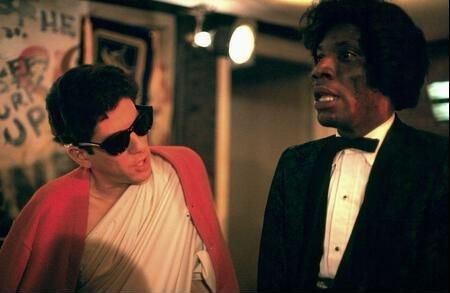
Shama lama ding dong
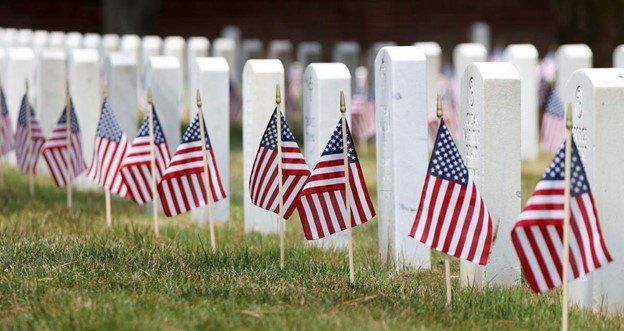
It was a small cemetery reached by an unpaved country road near Hebron, a Maryland town named after the city south of Jerusalem known as a burial ground for prophets. Ten years ago this month my old platoon leader, U.S. Army Master Sergeant Stephen “Smitty” Smith was buried with full military honors - four soldiers in dress blue uniforms carrying a flag-draped casket while a volley of shots were fired and Taps sounded. Alas, it’s a ritual that has been carried out many times since Smitty’s funeral. Smitty’s military career spanned a quarter century of American conflict - the Cold War, post-Cold War European turmoil and Islamic jihad. He was in Germany at Bad Aibling Station in 1985 as an enlisted soldier serving with a detachment intercepting Soviet and East German transmissions. He left active service, went to college and then joined the Maryland National Guard where I met him in the 629 th Military Intelligence Battalion, a Cold War-focused unit which exists no more. The First Gulf War in 1991 passed over the battalion but then there was a need for troops to police the turbulent Balkan states. Smitty volunteered in 1999 and deployed to Bosnia for more than a year. Then came 9/11 and because of the wars in Afghanistan and Iraq, manpower was stretched worldwide and in 2003 Smitty deployed again with the National Guard when the battalion sent a company of solders to Kosovo. Smitty served many years as a Non-Commissioned Officer (NCO), whose creed rightly establishes them as the “Backbone of the Army,” the human bridge between officers and enlisted soldiers. Says the creed: “My two basic responsibilities will always be uppermost in my mind—accomplishment of my mission and the welfare of my Soldiers.” A simple but a profound leadership charge. I saw those NCO leadership qualities up close as an enlisted Army Reservist then Army Guardsman for 14 years. And yet, I still find it difficult to properly explain to my non-service peers the deep military ethic behind such leadership - the sense of duty and loyalty, the cohesion of diverse units (my battalion was majority-minority) and the camaraderie that fostered performance and accountability. Of course, compared to the vast majority of servicemen and women, my military service was modest, mostly composed of maintaining Humvees, cleaning weapons, and performing administrative tasks. However, my three sons are active-duty military officers; two of them lead dozens of enlisted men and women and work with complex equipment (some of it lethal) worth hundreds of millions of dollars and have been in tight situations that are unfathomable to their non-military peers. My sons depend heavily on the Smittys of this world. Even after the grind of patrols in Kosovo Smitty hung in there and in 2007 deployed to Iraq to work in an intelligence role, the same job he’d had at Bad Aibling Station 22 years and several new world orders prior. He came back a year later and his closest friends immediately knew something was wrong. He isolated himself and when he did emerge, he was erratic in behavior and a changed man. He hadn’t been in combat in Iraq; the closest to danger he’d come was when one evening several Iraqi soldiers on his base haphazardly fired hundreds of rounds into the sky and dozens of bullets rained down through a large tent in which Smitty was attending a briefing, injuring several soldiers. At the beginning of 2012, he was found dead in his home of “natural causes” according to the Anne Arundel County coroner. At the funeral, his mother was defiant that “the war killed my son.” His sister insisted it was PTSD from Iraq, somehow amplified by his previous two deployments. A dozen guys from the old unit gather in the cemetery parking lot after Smitty’s burial, smoking cigarettes and drinking coffee and all of us are still shaken by the anger and rage of his Mom and sister. None of us knew what exactly had happened. And as with all guys who’ve served closely in a military unit, there was no lack of candor. One senior NCO, a real hardass though grudgingly admired, had driven 130 miles that morning to Hebron and he said, “Look, guys, you all know Smitty didn’t really like me at all and I didn’t really like him. We had some real blowups in Kosovo and at Victory [Camp Victory in Iraq] and all those rounds through the tent put us even more on edge. But I knew he respected me and I respected him.” Regret was the dominant sentiment. Why hadn’t we made more of an effort to see Smitty? To all these guys, mostly vets with an experienced outlook on service, it was a mystery. One thing though: The anger of his mom and sister pounded in our heads. The U.S. Department of Veterans Affairs notes that Post-Traumatic Stress Disorder was a “significant public health problem in Operation Enduring Freedom and Operation Iraqi Freedom (OEF/OIF) deployed and non-deployed Veterans” with studies that show “15.7% of OEF/OIF deployed Veterans screened positive for PTSD compared to 10.9% of non-deployed Veterans. Overall, 13.5% of study participants screened positive for PTSD.” For the National Guard, the PTSD number is 14.5 percent of deployed troops. The U.S. Department of Defense Casualty Status report for Iraq and Afghanistan still updated weekly, lists 4,431 U.S. deaths in Iraq and 2,352 in Afghanistan. On this Memorial Day, we honor the more than 1.1 million men and women who are listed as the casualties of all the wars fought by America. But as one of my old battalion comrades – himself an NCO - said in the cemetery outside Hebron, sometimes there can be a different kind of casualty of war. ____________ Jeff Nelligan is the author of "Four Lessons from My Three Sons - How You Can Raise Resilient Kids"(https://www.amazon.com/Four-Lessons-Three-Sons-Resilient/dp/B0C9SB2NLX) and lives in Annapolis, Maryland,
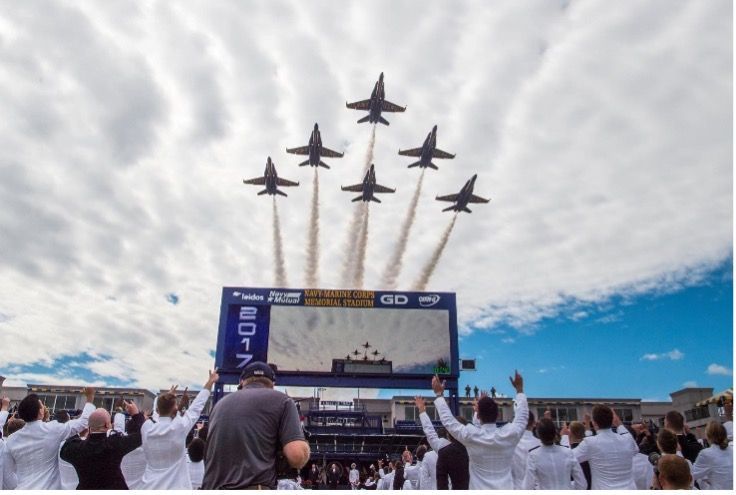
Doing not dreaming. Getting the small stuff right. And spare us the lectures on privilege.

Welcome future Justice Warriors!
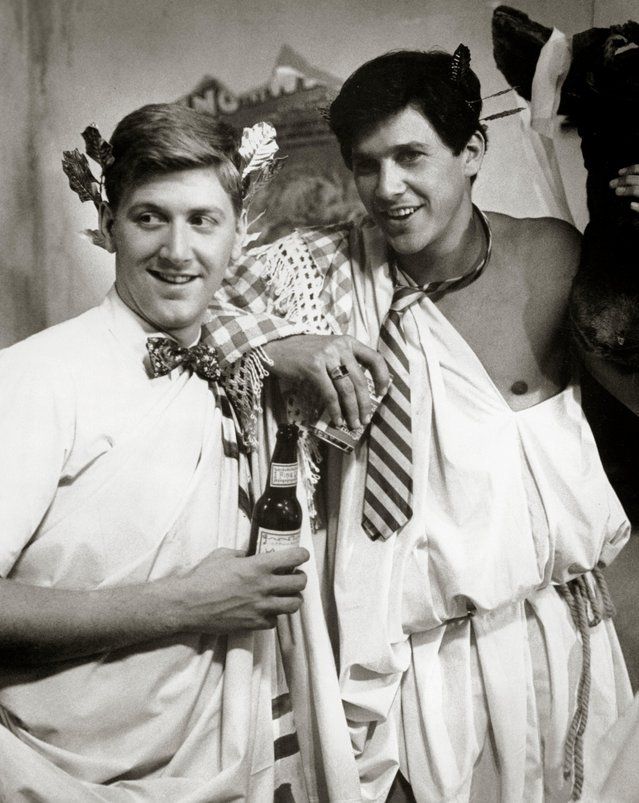
The most complex character in American cinematic history.
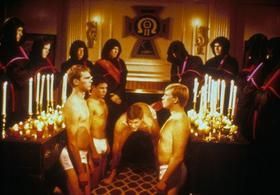
Douglas C. Neidermeyer, Membership Chairman, Omega Theta Pi

He discusses his inspiration for satire and the enduring appeal of “Animal House.”
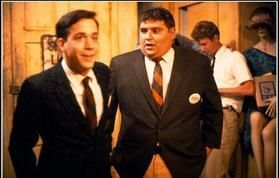
We begin at the very beginning. Where else? It’s an early autumn evening and two excited freshmen saunter under the swaying elms lining the Faber College quad. It’s fraternity Pledge week and Larry Kroger and Kent Dorfman are on their way, theoretically, to meet new friends and share cheerful bonhomie, forge lifelong bonds and celebrate virtuous brotherhood all around. Nothing could be further from the truth. These two pilgrims are actually beginning a Homeric Odyssey of the Innocents through the Faber Greek system, at the end of which they will emerge…but hey, let’s not get ahead of ourselves. Now, imagine holding to your eyes a kaleidoscope displaying an array of shifting scenes following our unwitting frosh duo, who serve as the chief catalysts of the film. Along with other chief catalysts. Who are they? Let’s find out. ______________________ “I, state your name…” Up the steps of a fashionable residence they stroll and a door opens into the Nietzschean hell of Omega Theta Pi. “Hi there, Doug Neidermeyer. Omega Membership Chairman.” This wonderfully patronizing voice foreshadows the rocky road ahead for our heroes. While sneering at Larry, Neidermeyer shuts the door on Kent’s head. Moments later, Omega Name Tag Hostesses Mandy Pepperidge and Babs Jansen cruelly take stock of the two, the latter voicing the endearing line that adorns this chapter. Forcefully guiding them away from the white Anglo-Saxon super-race of winners in the main room, our Membership Chairman delivers Larry and Kent to the nearby Third World sitting room where overt racism, antisemitism and ableism reach an instant and shocking peak. “Hi there fellas,” says Neidermeyer to the room’s hapless occupants, “I’d like you to meet Ken and Lonnie. Ken, Lonnie, let me introduce you to Mohammad, Jugdish, Sidney and Clayton.” Baleful stares emanate from the unfortunate trio on the couch and the inhabitant of the adjoining wheelchair. Then with his sphinxlike smile Neidermeyer adds, “Now, just grab yourselves a seat and make yourselves at home.” He forcefully pushes Lonnie onto the couch and then pats the corpulent Ken on the stomach while uttering one of the most vicious lines of the film: “And don’t be shy about helping yourself to the punch and cookies.” Spine-tingling action presaging the epic battles to come. Indeed, you can almost see the blind and crippled Clayton come to life. But hold on. Kent escapes this obvious trap to wander into the A-Listers piano lounge where Omega President Greg Marmalard, regency pipe in hand, holds forth to future shock trooper Chip Diller. Let’s listen in: “Now I’m not going to say Omega is the best house on campus. But a lot of outstanding guys figure they’ll pledge Omega or they won’t pledge at all. We do have more than our fair share of campus leaders. Something that never looks bad on your permanent record, Chip.” A pushy Chip Diller replies smarmily, “Well sure, everyone I talk to says Omega house is the best but…” Here Chip pauses and then continues, “I hate to seem you know, pushy…” Marmalard breaks in knowingly. “Let the unacceptable candidates worry about that because after tonight – “ Suddenly a sweaty Dorfman lurches into view next to Chip and Greg concludes “…there you are.” Oozing a mixture of insincerity and guile, Marmalard doesn’t miss a beat. He politely introduces Kent to Mandy Pepperidge and Chip, “…and over there is Terry Arbock, captain of the swim team, and that’s Carl Philips, editor of the Daily Faberian. And over here…” Marmalard skillfully steers him back to the land of the misfit toys “…is Clayton, Sidney, Jugless, Muhammad, Lonnie.” “We already met,” says Kent dolefully. “Ah, super! Then you’ll have plenty to talk about!” We have glimpsed our pure anti-heroes, Doug and Greg, and the percolating evil of Omega House in just 53 seconds. Are the battle lines drawn in this epic? Not quite yet, but the pencils are being sharpened. Shaking themselves free of the obvious Omega winners, Larry and Kent are outside again trudging onwards while the latter takes aim at his comrade’s pessimism. “I don’t think you’re trying very hard,” Dorfman says in exasperation. But he finds solace as they approach the known fraternity next door inasmuch as his brother was a Delta. “They gotta take me. It’s like their law. Don’t worry, Larry. I’ll put in a good word for you.” Moments later, in what some scholars call the most riveting scene in the film, Bluto urinates on their shoes. Another kaleidoscope of images bombards us from which there is no turning away. Because here we have another door opened - again that crafty symbolism! – and Delta Tau Chi is revealed to our nascent pledges. It’s a world of absolute mayhem (some use the word “symbolic” as a contrast to the hushed tones of the uptight Omega tea party). The squalid dwelling’s walls are covered in graffiti and cheesy posters and stolen road signs, loud music (a contrapuntal to the Liberace next door) and deafening conversation, beer bottles explode in every room and soon a motorcycle* breaks through the front door and is driven up the stairs to the second floor. Kent interrupts a high-stakes card game and Larry gazes at the breasts of a water-filled mermaid. ____________________ Author’s note: Carefully perceive here how the maudlin “coming of age” youth syndrome, normally years in the making in American life, is compressed into mere moments in this film. Striking. _____________________ Dorfman is soon introduced by Delta Tau Chi President Robert Hoover to Delta Rush Chairman Eric Stratton and his sidekick, Donald “Boon” Schoenstein. “Ken’s a legacy, Otter” says Hoover earnestly, “His brother Fred was a ’59.” Flounder helpfully interjects. “He says legacies usually get asked to pledge automatically.” Otter responds. “Oh well, usually. Unless the pledge in question turns out to be a real closet case. Like Fred.” Flounder gasps, “My brother!” Consider: Within five minutes the entire cast – minus one – is introduced. How do the screenwriters do it? Good question. Let’s fast forward because we can. At the official Delta Tau Chi Membership Meeting photos of Larry and Kent are projected by a slide projector on a beer-soaked bedsheet, provoking derisive cries of outrage and the heaving of empties. But as one savvy brother observes, Delta needs the dues. It is here we are witness to a unicorn moment which has escaped previous scholars and maybe even my esteemed readers. Dorfman’s pathos-ridden mugshot is shown, prompting Otter to rise to his feet to address his Delta brethren and defend Kent’s obvious unsuitability for any fraternity any where. This is the sole moment of kindly grace we see will see from Otter in the entire film. Noteworthy, but fleeting. In the seeming next moment, Hoover is wearing pajama bottoms, a Santa Claus jacket and a Viking horned helmet and initiating the pledges with the sacred Delta oath. In between belches, Sergeant-at-Arms Bluto majestically reveals their brotherhood identities, which is followed by the obligatory fraternity bonding scene: beer suds flying in the air and drunk young men dancing together and butchering the lyrics of culturally appropriated music....

Emile Faber, President of Faber College - 1904