
The Combine Grind
Jeff Nelligan • July 27, 2019
Autumn starts where the summer grinds to an end -- on a green turf field crisscrossed by white lines. Have you ever noticed the sideline boundaries are always thicker than those measuring progress down field in yards? It’s too prosaic to contemplate -- or maybe not.
Summer of 2013 – the season of competition. Two sons, four athletic camps, and six tournaments stretching from Boston to Virginia Beach and seven cities in between. Forty-six officiated lacrosse games, more than 51 football skill sessions, 23 7-on-7 games, and at every one, the ever-present figure of good-natured Nellie, with free advice for all. For the eldest son, it’s a drive to be noticed and ultimately coveted by NCAA college coaches, no less in two sports. For the younger Boys’ Town grad, all fields are testing grounds of skill and athleticism to prevail over top talent in order to compete at the level where both of his older brothers now reside. Eldest son, the steady Nellie Junior, triumphed in this fast-paced crucible and is now playing college athletics.
Sports, kids – what I’ve seen this summer in 2,700 miles of driving from New England to the Old South is most of all the American Dad: indefatigable, generous, hopeful, persistent and always folding up the chair at the end of the day – yes, on those prosaic sidelines -- thinking about tomorrow’s 8 a.m. session and how the heck their kid can improve his performance.
The football camps are the notorious combines.” A hundred select young men, 400 non-select kids -- all instantly organized, sorted by primary position, offense or defense, and then given identifying jersey numbers. This is the wonderful mechanics of these camps. There is little discussion or confusion, just a quick following of orders and hustling to get in line.
Next comes the long and detailed regimen of workout drills watched by alert coaches with the Career Beginning and Ending Clipboards. Your kid does closely watched drills with, for example, dozens of Outside Linebackers. The coaches watch intently and dispassionately for hours, and what they write on the Clipboard means your kid may have a shot at their school, or it’s time to back home to Momma.
And they’re not asking for anything complex here. In fact, it’s simple and repetitive, just perfect for your correspondent. Bulky, leather practice bags are laid out and kids high-step through them. The bags are placed at oblique angles at various distances and kids high-step through them. Kids are thrown a ball as they run through the bags. They either catch it or keep high-stepping to the parking lot.
Four guys are placed in a square, a few yards apart from each other, and told to react to hand signals from a coach. Up, back, left, right. Stopwatches are everywhere.
Across three wide open fields these drills go on. Linemen push sleds, QBs and receivers and cornerbacks try to outwit each other. For running backs, it’s running through pads carrying the ball: “Nose to the sky!” “Eyes up!” “Back straight!” Then passing drills with QBs and linebackers: “Sharp routes!” “No cross overs!” “Burst! Burst!” The drills run for hours, yells floating across the fields like a long muted drone.
Every kid is trying their best, giving everything they have. They’re prepared. Just to get here has required thousands of hours of practice, weight rooms, hot fields, cold mornings, pass routes long after dusk, countless collisions and snap counts. What a remarkable set of circumstances has propelled them here. And it’s certainly not Real Life because there is not a single slacker to be seen.
And the parents. Imagine the sheer production of getting Billie from Nashville or Pittsburgh or Seattle or Houston or Miami all the way to Boston or Annapolis.
Having attended these camps and tourneys for years, I measure success by two critical lements: Foot speed and size. And you can’t teach size. The eldest son, Nellie Junior, no behemoth, worked for years on agility –ladders, the parachute, shuttle runs, endless sprints -- and became one of the quickest kids on any field on which he plays (Yeah, I’ll brag a bit. What are you going to do? Throw a clipboard at me?) The value of foot speed is inestimable. The coaches are entranced with it.
It takes about three reps of drills on day one, hour one, for someone to see where a kid stacks up. The competition is ferocious. It doesn’t mean a darn thing that you were All League at Big Bad High in the Tri-County Conference. Can you move out fast? How tall are you?
And last, and the coaches have a stock phrase when approached by a kid introducing himself: “Howareyourgrades?” It’s one word. It’s direct and hard, but hey, football is a direct and hard sport.
Little Nellie is 6’1”, 210 pounds, a linebacker who in addition, plays fullback and tight end. To really seal the deal, about three years ago, I encouraged him to take up and get good at long-snapping because as former football great, Richie Petibon, once told me,
“Snapping is THE tie-breaker.” I.e. if a kid can do that, and play one, even two more positions, he’s going to make a team over someone else.
So my son and I practiced snapping, and I mean endlessly. We’d have four footballs and he’d shoot them back to me, one after another, as I stood in punt formation. Then then he’d shoot them back to me as I simulated a holder and Boys’ Town son kicked, all to get the tempo and rhythm down right. It no doubt looked comical to folks coming across us on a field. We read up on hand placement on the ball, how to use the legs to increase ball speed. Over time, the snaps got faster, held a tighter spiral, and now Little Nellie is a machine.
And yes, if you really think hard about all this, you recognize instantly there’s a defining element of sheer madness. “Yes, I’m on annual leave from a serious job, driving 450 miles to watch my kid jump around bags and catch passes and push sleds all over a field –for eight hours.” Once, a well-meaning Dad on the sideline affably asked me about my son. I was distracted and said robotically,
“Punt snap average zero point seven, zero point five on PATs.”
It was 10:15 p.m. at the Princeton Camp, and the hotly contestd 7-on-7 games had ended. We’d arrived here about 20 hours ago from a lacrosse camp in Providence, RI. After 48 hours here, we’d split for a three-day Under Armour lacrosse tournament in Baltimore.
I was walking Little Nellie back to the dorm. He’s beat. Heck, I’m even beat from sitting in a chair all day and spinning college intrigues in my head.
We’re passing darkened classrooms and buildings and big lonely quads. “My man,” I say, “I know this a grind. But if you’re going to play college ball, this is where you gotta be.” He was carrying his shoulder pads and helmet, his hair was matted to his scalp, his shirt soaked with sweat and his cleats clicked and echoed on the pavement.
“Yeah Dad,” he said and then added, asking and answering a question at the same time, “Where else would I be?”

ABOUT THE BOOK
Every Dad in America wants to raise a resilient kid.
Four Lessons from My Three Sons charts the course.
Written by a good-natured but unyielding father, this slim volume describes how his off-beat and yet powerful forms of encouragement helped his sons obtain the assurance, strength and integrity needed to achieve personal success and satisfaction. This book isn't 300 pages of pop child psychology or a fatherhood "journey" filled with jargon and equivocation. It's tough and hard and fast. It’s about how three boys made their way to the U.S. Naval Academy, Williams, and West Point – and beyond.
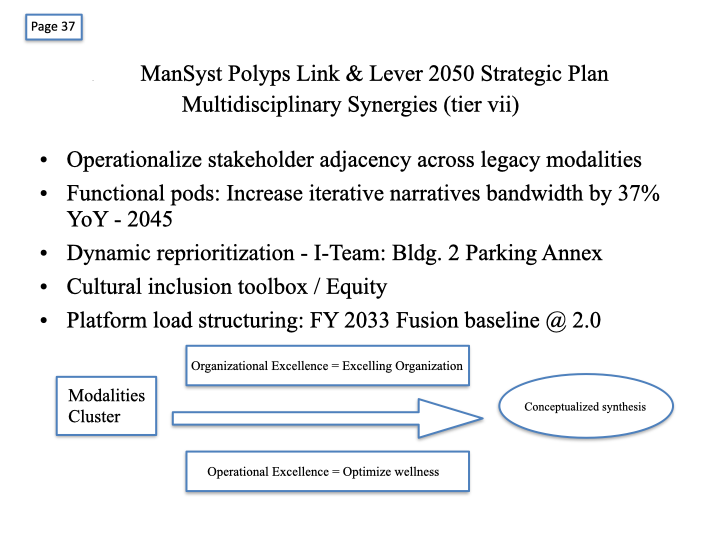
The email from the Office of Personnel Management arrived in more than two million Outlook email accounts. Those employees who didn’t log in that week soon heard about it. Subject Line: Fork in the Road. Highlights of the communication included: “…restored accountability… majority of agencies downsized…employees subject to enhanced standards of accountability and conduct…hiring process to focus on merit…” The shocking missive immediately triggered a privacy lawsuit filed by anonymous feds, Jane Doe 1 and Jane Doe 2, regarding “email server violations,” which some dishonestly took to mean it was improper for the federal government to contact all those who drew a paycheck from the federal government. Simultaneously, the American Federation of State, County and Municipal Employees, filed suit to “stop the purge of qualified professionals from the federal government workforce. Not only are these actions illegal and a scam, but they are eroding the health and well-being of our communities! Stop it!” Within hours of the email, Agency employee assistance programs were overwhelmed and grief counselors deployed to Teams calls. Feds reeled from the Fork. What did it all mean? ________________ Reactions Veronica - “No one’s going to tell me what road I’m on!” Yolanda - “This may be a sign that I should spend time with my grandbabies.” Chad – “Who gave the government access to my private government account?!” Zoe - “Like, how do I like, process this skibidi rizz?” Eddie – “I wonder what Skip is thinking right now.” Skip – “They can stick their goddamn fork where the sun don’t shine.” Kim – “In Korea, we have a saying for this: paguk ui sijak.” _________________ Veronica This is what happens when you elect Hitler! First thing he does is have his brownshirts issue threats - no one I know voted for that! No way Jose! And I’m not on a road! I’m on a path, where people walk beside me even though I have a PhD in social anthropology but that doesn’t matter because we’re all humyns and I can sometimes learn from anyone. Besides, a road has all those cars on it and their all going too fast! *** Fourteen years ago the Strategic Synergies (SS) office was looking for a dynamic mission-driven results-oriented leader capable of taking everyone to the next level. Although I was locked in at my community college job, I stepped up and made it through that godawful year with the USAJobs mess and those jerks in the Talent Toolbox office. I thought it was the end of the world eight years ago when I was at the PussyHat parade and our democracy was dying but now it’s dying even more and here comes Elon Musk with his chainsaw to go through my files. I guess this is the world we live in today. This is what it’s come to - where your employer can send you emails telling you that things are going to change. But why would anyone want to change what we’re accomplishing in the SS?! I mean, it’s too complicated to explain but here’s what I see at the 50,000-foot level: A narrative synthesis of unique pods oriented toward transformative continuums. Yes, optimized pods empowering us toward nimble modular fusions in the Polyps paradigm. I’ve walked the talk with our Link and Leverage 2050 Strategic Vision Plan and our ppts are the talk of the town! Everyone around here raves about our gif mascot, “Linky” embedded in the bi-weekly ManSyst-wide emails – “Link with me, Think with me!” So cute but so powerful. Then there’s our presentations on Diversity, Equity, Inclusion & Accessibility – our “Rainbow of Hues” (don’t say colors, it’s racist) and our ReImagine Series “Close your eyes. Now open them.” Who says social anthropology has no place in the 21 st century workforce?! I sure don’t! *** Then, several days after this outrageous email (well fork you too!) I get a voicemail from some mysterious DOGE jerk who calls himself “Lunchbox.” He says he’s calling on behalf of Skip, our deputy director who assigned me to L & L, to discuss my work in the SS. No way Jose! I have no interest in fraternizing with the enemy as they say but I do need to set him straight on some of the work I’ve done before he talks to the other folks around here – some of them can be so dense when it comes to optimized pods. Sure, Lunchpail may sound harmless enough but that’s how these fascists roll. Ask Hitler. And I’m going to make myself clear right now. No tool named Lunchbox is going to tell me what to do. I have a decade worth of presentations that show my worth and I can easily take my talents elsewhere. The good thing is I have some great contacts at USAID. __________________________________ Ok, Lunchbox isn’t my real name. It’s Doorknob. Gotcha! Boom! Ever since Big Ballz got all that buzz people have been razzing me about making up my nickname to be cool. But hold on, hombres. Mine came wayyyy before the Ballzman. I first got snagged for it because of the Star Trek lunch boxes I had in junior high school. Major-league Trekkie here from the get-go. All my friends back then started calling me Lunchbox and it stuck through high school and then college and for a gag because I consider myself a total jokester, I got the retro ST plastic Next Generation and took it to my first job out of MIT at Google and all the tech nerds loved it and it became my new gag here and it still is. So there - I cleared that up. I try to live on the lighter side of life and I even do a little improv on the side at Bay Area clubs using Trekkie and Star Wars gags, like, “Which program do Jedi use to open PDF files?" "Adobe-WanKenobi.” Bang! I gotta a hundred of them. *** I’m part of a data analytics team at Alphabet (one of the original googlers, old-timers from before we became Alphabet. Even scored a signed cocktail napkin from Sergey Brin at an investor conference. Shazzam!). My typical week is tracking where a beta group goes and is likely to go and not to go for ads and news and purchases. It involves strategy, small s, and no, it has nothing to do with synergies. We know our products and we strategize – there’s no other word – on what makes us money. Strategy equals data equals revenue. Period. I’m grateful for my job and my G posse and so when my boss came looking for guys for a four-month detail to Washington, D.C. – bonus attached, downtown apartment and an expense account - and a buncha time to see all the museum stuff, I said beam me up Scottie! Given my background I was assigned to a place to review five offices with Strategy in the title and one was called “Strategic Synergies.” WTH?! So I was ready to boldly go where no googler had gone before but no one prepared me for SS. Or Veronica. *** Now, I have no axe to grind against government. The only time I deal with it is at the DMV back in Mountain View. But I couldn’t figure these offices out. Like I said, strategy results in results. If you can’t measure it, it didn’t happen. And it’s not happening here. From what I scan about Veronica’s office is that they just turn out power point decks for presentations - “ReImagine the Process!” “Topple the Silos!” “Convergent Paradigms!” Like what is the impact at the end of a week or a month? What do you get? Like, dollars saved, task times reduced, more clients served? Instead, I got of gibberish words. Dammit Jim, I’m a doctor, not a bureaucrat! I asked one of her staffers what he does in a typical week and he says multi-domain interfacing. I asked what that meant and he replies “Ask Veronica.” Like I said, ManSyst has five offices with Strategy in the title and all I can tell is that they each shuffle their slide decks between them, change the font style and add in smiley face and thumbs up emojis. So weird. Sounds like what those chumps to do at Meta – ha! Boom! When I finally met with Veronica she was defensive and who could blame her? She was wearing a long tie-dye skirt and necklaces of beads that looked like dry macaroni. There were all these weird aspirational posters in her room. “There’s no I in Team,” “Pulling Together We Can,” “Today is Today and Yesterday Can Be Tomorrow.” I told her up front I had no authority or anything. I was just an observer and was like her, into strategy. She softened up a bit and told me what she was “trying to accomplish in the modalities space” with the Linkages and Leverage 2050 Strategic Plan and then showed me this funky email with a gif of a talking paper clip. She was being so sincere about this stuff and I started to get uncomfortable and a little sad so I asked what happens after you give the ppt presentation? She told me people are empowered to envision a new workspace reality. Then what? Well, we schedule another presentation. Since this is my first time in government, I just let it go. The four other offices were just as, well, raw. I wrote up a brief report and said the SS had some challenges. I’m not here to be the bad guy. Like I said, she means well. She just got into believing her own headlines. Or PowerPoints. *** A couple weeks before heading back to the googleplex I heard that Veronica was saying that everything had become so toxic with all these fascists hanging around and she was going to leave with her dignity intact and go where they appreciate pods. But man have I seen a lot of cool stuff! White House tour? Check. Capitol tour? Check. Udvar Hazy? Check. D.C. Improv Club? Check. Kensington Antique Row (at which I picked up a special collector’s item!)? Check. Air and Space Museum? Check! I put it all together in a scrapbook (tech geeks can go old school!) and I even got a photo with the DOGE boys outside EEOB. I’m in the front row holding…wait for it…my 2016 Star Trek 50th Anniversary Lunch Box. Boom!! The Day Before and After DOGE is available on Amazon.
"What did you do last week?"
Shama lama ding dong

It was a small cemetery reached by an unpaved country road near Hebron, a Maryland town named after the city south of Jerusalem known as a burial ground for prophets. Ten years ago this month my old platoon leader, U.S. Army Master Sergeant Stephen “Smitty” Smith was buried with full military honors - four soldiers in dress blue uniforms carrying a flag-draped casket while a volley of shots were fired and Taps sounded. Alas, it’s a ritual that has been carried out many times since Smitty’s funeral. Smitty’s military career spanned a quarter century of American conflict - the Cold War, post-Cold War European turmoil and Islamic jihad. He was in Germany at Bad Aibling Station in 1985 as an enlisted soldier serving with a detachment intercepting Soviet and East German transmissions. He left active service, went to college and then joined the Maryland National Guard where I met him in the 629 th Military Intelligence Battalion, a Cold War-focused unit which exists no more. The First Gulf War in 1991 passed over the battalion but then there was a need for troops to police the turbulent Balkan states. Smitty volunteered in 1999 and deployed to Bosnia for more than a year. Then came 9/11 and because of the wars in Afghanistan and Iraq, manpower was stretched worldwide and in 2003 Smitty deployed again with the National Guard when the battalion sent a company of solders to Kosovo. Smitty served many years as a Non-Commissioned Officer (NCO), whose creed rightly establishes them as the “Backbone of the Army,” the human bridge between officers and enlisted soldiers. Says the creed: “My two basic responsibilities will always be uppermost in my mind—accomplishment of my mission and the welfare of my Soldiers.” A simple but a profound leadership charge. I saw those NCO leadership qualities up close as an enlisted Army Reservist then Army Guardsman for 14 years. And yet, I still find it difficult to properly explain to my non-service peers the deep military ethic behind such leadership - the sense of duty and loyalty, the cohesion of diverse units (my battalion was majority-minority) and the camaraderie that fostered performance and accountability. Of course, compared to the vast majority of servicemen and women, my military service was modest, mostly composed of maintaining Humvees, cleaning weapons, and performing administrative tasks. However, my three sons are active-duty military officers; two of them lead dozens of enlisted men and women and work with complex equipment (some of it lethal) worth hundreds of millions of dollars and have been in tight situations that are unfathomable to their non-military peers. My sons depend heavily on the Smittys of this world. Even after the grind of patrols in Kosovo Smitty hung in there and in 2007 deployed to Iraq to work in an intelligence role, the same job he’d had at Bad Aibling Station 22 years and several new world orders prior. He came back a year later and his closest friends immediately knew something was wrong. He isolated himself and when he did emerge, he was erratic in behavior and a changed man. He hadn’t been in combat in Iraq; the closest to danger he’d come was when one evening several Iraqi soldiers on his base haphazardly fired hundreds of rounds into the sky and dozens of bullets rained down through a large tent in which Smitty was attending a briefing, injuring several soldiers. At the beginning of 2012, he was found dead in his home of “natural causes” according to the Anne Arundel County coroner. At the funeral, his mother was defiant that “the war killed my son.” His sister insisted it was PTSD from Iraq, somehow amplified by his previous two deployments. A dozen guys from the old unit gather in the cemetery parking lot after Smitty’s burial, smoking cigarettes and drinking coffee and all of us are still shaken by the anger and rage of his Mom and sister. None of us knew what exactly had happened. And as with all guys who’ve served closely in a military unit, there was no lack of candor. One senior NCO, a real hardass though grudgingly admired, had driven 130 miles that morning to Hebron and he said, “Look, guys, you all know Smitty didn’t really like me at all and I didn’t really like him. We had some real blowups in Kosovo and at Victory [Camp Victory in Iraq] and all those rounds through the tent put us even more on edge. But I knew he respected me and I respected him.” Regret was the dominant sentiment. Why hadn’t we made more of an effort to see Smitty? To all these guys, mostly vets with an experienced outlook on service, it was a mystery. One thing though: The anger of his mom and sister pounded in our heads. The U.S. Department of Veterans Affairs notes that Post-Traumatic Stress Disorder was a “significant public health problem in Operation Enduring Freedom and Operation Iraqi Freedom (OEF/OIF) deployed and non-deployed Veterans” with studies that show “15.7% of OEF/OIF deployed Veterans screened positive for PTSD compared to 10.9% of non-deployed Veterans. Overall, 13.5% of study participants screened positive for PTSD.” For the National Guard, the PTSD number is 14.5 percent of deployed troops. The U.S. Department of Defense Casualty Status report for Iraq and Afghanistan still updated weekly, lists 4,431 U.S. deaths in Iraq and 2,352 in Afghanistan. On this Memorial Day, we honor the more than 1.1 million men and women who are listed as the casualties of all the wars fought by America. But as one of my old battalion comrades – himself an NCO - said in the cemetery outside Hebron, sometimes there can be a different kind of casualty of war. ____________ Jeff Nelligan is the author of "Four Lessons from My Three Sons - How You Can Raise Resilient Kids"(https://www.amazon.com/Four-Lessons-Three-Sons-Resilient/dp/B0C9SB2NLX) and lives in Annapolis, Maryland,
Doing not dreaming. Getting the small stuff right. And spare us the lectures on privilege.

Welcome future Justice Warriors!
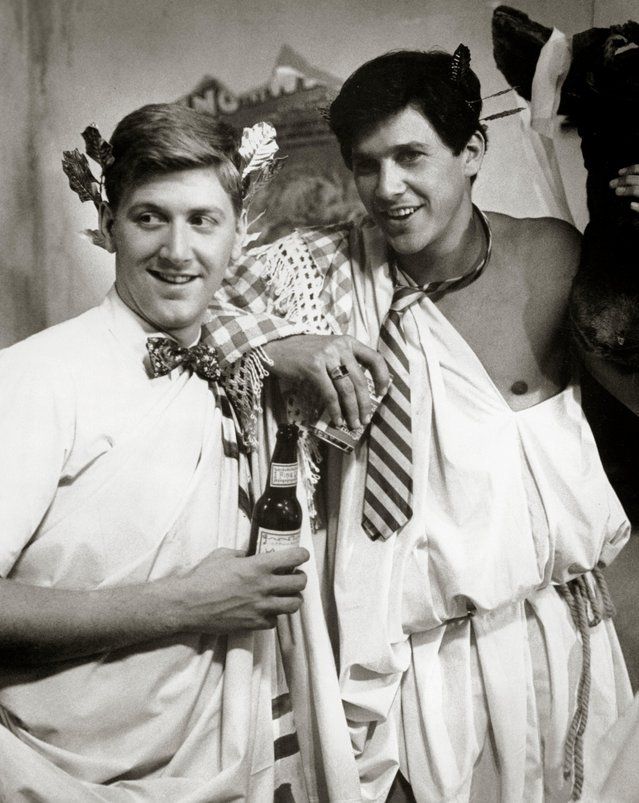
The most complex character in American cinematic history.
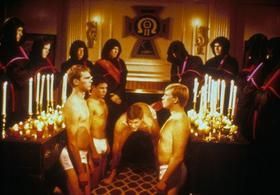
Douglas C. Neidermeyer, Membership Chairman, Omega Theta Pi
He discusses his inspiration for satire and the enduring appeal of “Animal House.”
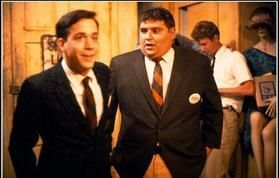
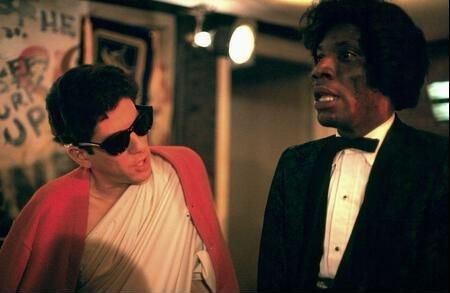
We begin at the very beginning. Where else? It’s an early autumn evening and two excited freshmen saunter under the swaying elms lining the Faber College quad. It’s fraternity Pledge week and Larry Kroger and Kent Dorfman are on their way, theoretically, to meet new friends and share cheerful bonhomie, forge lifelong bonds and celebrate virtuous brotherhood all around. Nothing could be further from the truth. These two pilgrims are actually beginning a Homeric Odyssey of the Innocents through the Faber Greek system, at the end of which they will emerge…but hey, let’s not get ahead of ourselves. Now, imagine holding to your eyes a kaleidoscope displaying an array of shifting scenes following our unwitting frosh duo, who serve as the chief catalysts of the film. Along with other chief catalysts. Who are they? Let’s find out. ______________________ “I, state your name…” Up the steps of a fashionable residence they stroll and a door opens into the Nietzschean hell of Omega Theta Pi. “Hi there, Doug Neidermeyer. Omega Membership Chairman.” This wonderfully patronizing voice foreshadows the rocky road ahead for our heroes. While sneering at Larry, Neidermeyer shuts the door on Kent’s head. Moments later, Omega Name Tag Hostesses Mandy Pepperidge and Babs Jansen cruelly take stock of the two, the latter voicing the endearing line that adorns this chapter. Forcefully guiding them away from the white Anglo-Saxon super-race of winners in the main room, our Membership Chairman delivers Larry and Kent to the nearby Third World sitting room where overt racism, antisemitism and ableism reach an instant and shocking peak. “Hi there fellas,” says Neidermeyer to the room’s hapless occupants, “I’d like you to meet Ken and Lonnie. Ken, Lonnie, let me introduce you to Mohammad, Jugdish, Sidney and Clayton.” Baleful stares emanate from the unfortunate trio on the couch and the inhabitant of the adjoining wheelchair. Then with his sphinxlike smile Neidermeyer adds, “Now, just grab yourselves a seat and make yourselves at home.” He forcefully pushes Lonnie onto the couch and then pats the corpulent Ken on the stomach while uttering one of the most vicious lines of the film: “And don’t be shy about helping yourself to the punch and cookies.” Spine-tingling action presaging the epic battles to come. Indeed, you can almost see the blind and crippled Clayton come to life. But hold on. Kent escapes this obvious trap to wander into the A-Listers piano lounge where Omega President Greg Marmalard, regency pipe in hand, holds forth to future shock trooper Chip Diller. Let’s listen in: “Now I’m not going to say Omega is the best house on campus. But a lot of outstanding guys figure they’ll pledge Omega or they won’t pledge at all. We do have more than our fair share of campus leaders. Something that never looks bad on your permanent record, Chip.” A pushy Chip Diller replies smarmily, “Well sure, everyone I talk to says Omega house is the best but…” Here Chip pauses and then continues, “I hate to seem you know, pushy…” Marmalard breaks in knowingly. “Let the unacceptable candidates worry about that because after tonight – “ Suddenly a sweaty Dorfman lurches into view next to Chip and Greg concludes “…there you are.” Oozing a mixture of insincerity and guile, Marmalard doesn’t miss a beat. He politely introduces Kent to Mandy Pepperidge and Chip, “…and over there is Terry Arbock, captain of the swim team, and that’s Carl Philips, editor of the Daily Faberian. And over here…” Marmalard skillfully steers him back to the land of the misfit toys “…is Clayton, Sidney, Jugless, Muhammad, Lonnie.” “We already met,” says Kent dolefully. “Ah, super! Then you’ll have plenty to talk about!” We have glimpsed our pure anti-heroes, Doug and Greg, and the percolating evil of Omega House in just 53 seconds. Are the battle lines drawn in this epic? Not quite yet, but the pencils are being sharpened. Shaking themselves free of the obvious Omega winners, Larry and Kent are outside again trudging onwards while the latter takes aim at his comrade’s pessimism. “I don’t think you’re trying very hard,” Dorfman says in exasperation. But he finds solace as they approach the known fraternity next door inasmuch as his brother was a Delta. “They gotta take me. It’s like their law. Don’t worry, Larry. I’ll put in a good word for you.” Moments later, in what some scholars call the most riveting scene in the film, Bluto urinates on their shoes. Another kaleidoscope of images bombards us from which there is no turning away. Because here we have another door opened - again that crafty symbolism! – and Delta Tau Chi is revealed to our nascent pledges. It’s a world of absolute mayhem (some use the word “symbolic” as a contrast to the hushed tones of the uptight Omega tea party). The squalid dwelling’s walls are covered in graffiti and cheesy posters and stolen road signs, loud music (a contrapuntal to the Liberace next door) and deafening conversation, beer bottles explode in every room and soon a motorcycle* breaks through the front door and is driven up the stairs to the second floor. Kent interrupts a high-stakes card game and Larry gazes at the breasts of a water-filled mermaid. ____________________ Author’s note: Carefully perceive here how the maudlin “coming of age” youth syndrome, normally years in the making in American life, is compressed into mere moments in this film. Striking. _____________________ Dorfman is soon introduced by Delta Tau Chi President Robert Hoover to Delta Rush Chairman Eric Stratton and his sidekick, Donald “Boon” Schoenstein. “Ken’s a legacy, Otter” says Hoover earnestly, “His brother Fred was a ’59.” Flounder helpfully interjects. “He says legacies usually get asked to pledge automatically.” Otter responds. “Oh well, usually. Unless the pledge in question turns out to be a real closet case. Like Fred.” Flounder gasps, “My brother!” Consider: Within five minutes the entire cast – minus one – is introduced. How do the screenwriters do it? Good question. Let’s fast forward because we can. At the official Delta Tau Chi Membership Meeting photos of Larry and Kent are projected by a slide projector on a beer-soaked bedsheet, provoking derisive cries of outrage and the heaving of empties. But as one savvy brother observes, Delta needs the dues. It is here we are witness to a unicorn moment which has escaped previous scholars and maybe even my esteemed readers. Dorfman’s pathos-ridden mugshot is shown, prompting Otter to rise to his feet to address his Delta brethren and defend Kent’s obvious unsuitability for any fraternity any where. This is the sole moment of kindly grace we see will see from Otter in the entire film. Noteworthy, but fleeting. In the seeming next moment, Hoover is wearing pajama bottoms, a Santa Claus jacket and a Viking horned helmet and initiating the pledges with the sacred Delta oath. In between belches, Sergeant-at-Arms Bluto majestically reveals their brotherhood identities, which is followed by the obligatory fraternity bonding scene: beer suds flying in the air and drunk young men dancing together and butchering the lyrics of culturally appropriated music....