
“Read the crowd”
Jeff Nelligan • February 26, 2024
Teaching your kids how to understand and operate in the real world.
Leave it to the eminent psychologist Ron “Jaws” Jaworski, B.A., Youngstown State, 1973, to define the essence of a confident worldview: “Facemask up!” It was his signature comment when talking about a pro quarterback leaving the pocket and instead of keeping his eyes up field to find the open receiver, was looking down at his feet as he ran.
It’s a plain tale in a cluttered age and the meaning is simple: Be alert. Pay attention. Take in your surroundings. Examine and understand the landscape in front of you. Here’s one for the modern-age kid: Get your eyes off the glowing rectangle and absorb the world. The more one absorbs the world, the more confident one becomes.
Because I have spent many years as an operative in the political realm, I’ve become skilled at helping principals navigate through individuals - five, fifty, five hundred - and I was keen on situational awareness. “SA” as the boys and I called it means eyes and ears focused; it’s about getting a feel for the dynamics of the people whom you are around, and the places in which you find yourself.
I wanted them to have active minds that eschewed taking anything at face value, minds that really tried to understand the behavior and temperaments of their peers and the converse, total strangers. I wanted them to know how to handle themselves in the real world, in routine and unfamiliar circumstances.
Here’s how the instruction began: When they were young – the eldest only nine-years old, the four of us were in a crowded department store where I had gone to buy a blazer. Standing here amidst the press of people, looking for a salesman, I told them in a whisper, which got their immediate attention, “Guys, I want you to watch this closely.”
I carefully walked by several salespeople in the men’s clothing area, glancing back at the boys each time, then circled back past the fourth to a third guy. I got the answer and I help needed from him and came back to the boys. “OK boys, tell me what you saw.” They talked over each other about my walking around and passing by different clerks and then the middle kid spoke for all. “Why did you go to that guy? He wasn’t even next to the jackets.”
“Here’s why, and pay attention. Everywhere you go, in every situation, you gotta look at people and figure them out fast.” Blank stares. I doggedly continued: “If you need some-thing, like I needed this blazer, you need to decide who is the best person to help you. I looked at the four sales guys – their clothes, the way they were standing, if they looked nice and smart, if they were smiling. Then I made my decision and chose that one man because I thought he would help me the most. Gents, you gotta read the crowd.” There was a faint glimmer of understanding, but there was a ways to go.
How did I drive it home? Simple. I made them do it. Not long after, we were in the corridors of a big indoor mall. I took three $5 bills out of my wallet and handed one to each kid. “Here’s the deal. I want each of you to go into one of the stores along here and get change for the fiver. This isn’t a race. You have to go alone and then come back tell me about what you did.”
Of course, I had their total attention. This was action on their part and they were excited. Yeah, I kept an eye on them, the youngest being five. Each one took off, navigating through shoppers, going into various stores, two striking out and coming back out and into other stores.
They were overjoyed, to share their stories when they got back. We did this change-the-five deal often. There were other stunts. I’d have the 9-year-old go into a convenience store with cash – and some of these were rough-and-tumble places - to get beef jerky and Doritos. I’d pull into the parking lot of a carry-out restaurant and instruct the 8-year-old take our order, memorize it, and then go into the place and get it and pay for it. At airports, I put the eldest, then later the middle kid, in charge of getting boarding passes, either from a kiosk or handling everything with an agent while the rest of us stood by. At ages 11 and 10.
All three sons soon became accustomed to this independence. They’d become totally engaged in these “tests” and after they’d be thrilled, as only young boys can be, to talk about their treks. By making it a game, I immediately won the boys’ participation.
Fast forward: The eldest at age 15 is at big train station in New Jersey, confused about schedules and noise and surging people. He gets himself calmed down and starts looking around him and sees a kid carrying an orange duffle bag emblazoned with “McDonogh School Athletics.” My son has played against this school and thus feels comfortable in introducing himself to the kid and asking advice. It turns out the guy knows all about schedules and points s my son to the right train.
The middle kid, not quite eight-years-old, is at a bowling alley and an arcade machine eats his money. He doesn’t lose his cool, loiters around, waits for the same thing to happen to an older kid and then discovers, by watching the older kid, who the attendant is in charge of fiddling with the machine and refunding the money.
Virtually everywhere we went, from the most pedestrian places to the most exciting, we’d play the game. What do you see? Who is doing what? Who is hot and who is not? “Take in all the folks around you, measure them. Which one would you trust? Who is sketchy?” You need to impress upon your son these opportunities in the arena all around us.
The youngest son, six-years old, is at a kids’ party at a big shopping mall, with a pair of hopelessly disorganized parents who drift away with a group of youngsters, leaving my boy and two other kids in the midst of a huge food court. You’re a Dad - you can only imagine the initial panic the kids felt when they realized they were alone.
But aha, Nelligan Junior knows what to do. He recalls what I told him and his brothers once when we were in the surging crowds at a local college football stadium. “You guys are small so if you get lost somewhere in a bunch of people, look for that guy with a stripe running down their pants. That’s a policeman or a soldier and they’ll help out.”
At the mall, my kid tells that to the two other kids and they stand for a few minutes, intently staring at passing legs.They see a mall security officer, who eventually links them up with the irresponsible parents.
Self-assurance just doesn’t happen, it’s gained through encounters of all kinds. Whether it’s a group of four or a mob of several hundred, get them reading the crowd. Here’s a challenge to parents: Undertake one of the examples noted above – gently push your kid into a situation where he or she has to be alert and think on their feet in this everyday world around us all.
You’ll be giving your child an inestimable lesson on the independence that creates a resilient kid.

ABOUT THE BOOK
Every Dad in America wants to raise a resilient kid.
Four Lessons from My Three Sons charts the course.
Written by a good-natured but unyielding father, this slim volume describes how his off-beat and yet powerful forms of encouragement helped his sons obtain the assurance, strength and integrity needed to achieve personal success and satisfaction. This book isn't 300 pages of pop child psychology or a fatherhood "journey" filled with jargon and equivocation. It's tough and hard and fast. It’s about how three boys made their way to the U.S. Naval Academy, Williams, and West Point – and beyond.
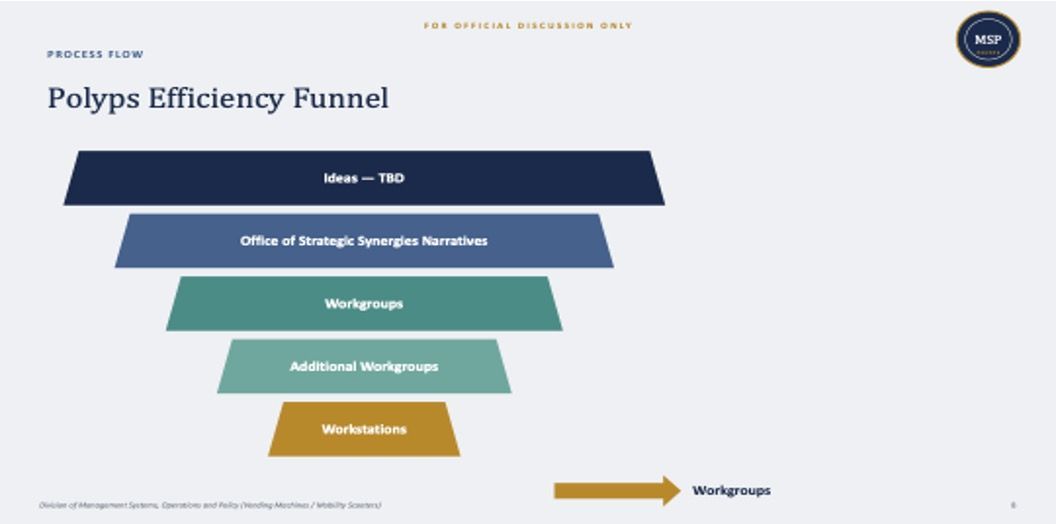
Division of Management Systems, Operation and Policy (Vending Machines / Mobility Scooters)
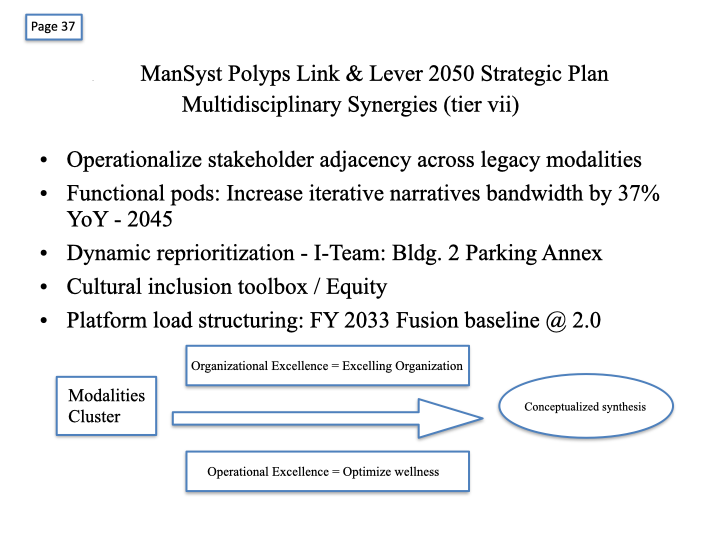
The email from the Office of Personnel Management arrived in more than two million Outlook email accounts. Those employees who didn’t log in that week soon heard about it. Subject Line: Fork in the Road. Highlights of the communication included: “…restored accountability… majority of agencies downsized…employees subject to enhanced standards of accountability and conduct…hiring process to focus on merit…” The shocking missive immediately triggered a privacy lawsuit filed by anonymous feds, Jane Doe 1 and Jane Doe 2, regarding “email server violations,” which some dishonestly took to mean it was improper for the federal government to contact all those who drew a paycheck from the federal government. Simultaneously, the American Federation of State, County and Municipal Employees, filed suit to “stop the purge of qualified professionals from the federal government workforce. Not only are these actions illegal and a scam, but they are eroding the health and well-being of our communities! Stop it!” Within hours of the email, Agency employee assistance programs were overwhelmed and grief counselors deployed to Teams calls. Feds reeled from the Fork. What did it all mean? ________________ Reactions Veronica - “No one’s going to tell me what road I’m on!” Yolanda - “This may be a sign that I should spend time with my grandbabies.” Chad – “Who gave the government access to my private government account?!” Zoe - “Like, how do I like, process this skibidi rizz?” Eddie – “I wonder what Skip is thinking right now.” Skip – “They can stick their goddamn fork where the sun don’t shine.” Kim – “In Korea, we have a saying for this: paguk ui sijak.” _________________ Veronica This is what happens when you elect Hitler! First thing he does is have his brownshirts issue threats - no one I know voted for that! No way Jose! And I’m not on a road! I’m on a path, where people walk beside me even though I have a PhD in social anthropology but that doesn’t matter because we’re all humyns and I can sometimes learn from anyone. Besides, a road has all those cars on it and their all going too fast! *** Fourteen years ago the Strategic Synergies (SS) office was looking for a dynamic mission-driven results-oriented leader capable of taking everyone to the next level. Although I was locked in at my community college job, I stepped up and made it through that godawful year with the USAJobs mess and those jerks in the Talent Toolbox office. I thought it was the end of the world eight years ago when I was at the PussyHat parade and our democracy was dying but now it’s dying even more and here comes Elon Musk with his chainsaw to go through my files. I guess this is the world we live in today. This is what it’s come to - where your employer can send you emails telling you that things are going to change. But why would anyone want to change what we’re accomplishing in the SS?! I mean, it’s too complicated to explain but here’s what I see at the 50,000-foot level: A narrative synthesis of unique pods oriented toward transformative continuums. Yes, optimized pods empowering us toward nimble modular fusions in the Polyps paradigm. I’ve walked the talk with our Link and Leverage 2050 Strategic Vision Plan and our ppts are the talk of the town! Everyone around here raves about our gif mascot, “Linky” embedded in the bi-weekly ManSyst-wide emails – “Link with me, Think with me!” So cute but so powerful. Then there’s our presentations on Diversity, Equity, Inclusion & Accessibility – our “Rainbow of Hues” (don’t say colors, it’s racist) and our ReImagine Series “Close your eyes. Now open them.” Who says social anthropology has no place in the 21 st century workforce?! I sure don’t! *** Then, several days after this outrageous email (well fork you too!) I get a voicemail from some mysterious DOGE jerk who calls himself “Lunchbox.” He says he’s calling on behalf of Skip, our deputy director who assigned me to L & L, to discuss my work in the SS. No way Jose! I have no interest in fraternizing with the enemy as they say but I do need to set him straight on some of the work I’ve done before he talks to the other folks around here – some of them can be so dense when it comes to optimized pods. Sure, Lunchpail may sound harmless enough but that’s how these fascists roll. Ask Hitler. And I’m going to make myself clear right now. No tool named Lunchbox is going to tell me what to do. I have a decade worth of presentations that show my worth and I can easily take my talents elsewhere. The good thing is I have some great contacts at USAID. __________________________________ Ok, Lunchbox isn’t my real name. It’s Doorknob. Gotcha! Boom! Ever since Big Ballz got all that buzz people have been razzing me about making up my nickname to be cool. But hold on, hombres. Mine came wayyyy before the Ballzman. I first got snagged for it because of the Star Trek lunch boxes I had in junior high school. Major-league Trekkie here from the get-go. All my friends back then started calling me Lunchbox and it stuck through high school and then college and for a gag because I consider myself a total jokester, I got the retro ST plastic Next Generation and took it to my first job out of MIT at Google and all the tech nerds loved it and it became my new gag here and it still is. So there - I cleared that up. I try to live on the lighter side of life and I even do a little improv on the side at Bay Area clubs using Trekkie and Star Wars gags, like, “Which program do Jedi use to open PDF files?" "Adobe-WanKenobi.” Bang! I gotta a hundred of them. *** I’m part of a data analytics team at Alphabet (one of the original googlers, old-timers from before we became Alphabet. Even scored a signed cocktail napkin from Sergey Brin at an investor conference. Shazzam!). My typical week is tracking where a beta group goes and is likely to go and not to go for ads and news and purchases. It involves strategy, small s, and no, it has nothing to do with synergies. We know our products and we strategize – there’s no other word – on what makes us money. Strategy equals data equals revenue. Period. I’m grateful for my job and my G posse and so when my boss came looking for guys for a four-month detail to Washington, D.C. – bonus attached, downtown apartment and an expense account - and a buncha time to see all the museum stuff, I said beam me up Scottie! Given my background I was assigned to a place to review five offices with Strategy in the title and one was called “Strategic Synergies.” WTH?! So I was ready to boldly go where no googler had gone before but no one prepared me for SS. Or Veronica. *** Now, I have no axe to grind against government. The only time I deal with it is at the DMV back in Mountain View. But I couldn’t figure these offices out. Like I said, strategy results in results. If you can’t measure it, it didn’t happen. And it’s not happening here. From what I scan about Veronica’s office is that they just turn out power point decks for presentations - “ReImagine the Process!” “Topple the Silos!” “Convergent Paradigms!” Like what is the impact at the end of a week or a month? What do you get? Like, dollars saved, task times reduced, more clients served? Instead, I got of gibberish words. Dammit Jim, I’m a doctor, not a bureaucrat! I asked one of her staffers what he does in a typical week and he says multi-domain interfacing. I asked what that meant and he replies “Ask Veronica.” Like I said, ManSyst has five offices with Strategy in the title and all I can tell is that they each shuffle their slide decks between them, change the font style and add in smiley face and thumbs up emojis. So weird. Sounds like what those chumps to do at Meta – ha! Boom! When I finally met with Veronica she was defensive and who could blame her? She was wearing a long tie-dye skirt and necklaces of beads that looked like dry macaroni. There were all these weird aspirational posters in her room. “There’s no I in Team,” “Pulling Together We Can,” “Today is Today and Yesterday Can Be Tomorrow.” I told her up front I had no authority or anything. I was just an observer and was like her, into strategy. She softened up a bit and told me what she was “trying to accomplish in the modalities space” with the Linkages and Leverage 2050 Strategic Plan and then showed me this funky email with a gif of a talking paper clip. She was being so sincere about this stuff and I started to get uncomfortable and a little sad so I asked what happens after you give the ppt presentation? She told me people are empowered to envision a new workspace reality. Then what? Well, we schedule another presentation. Since this is my first time in government, I just let it go. The four other offices were just as, well, raw. I wrote up a brief report and said the SS had some challenges. I’m not here to be the bad guy. Like I said, she means well. She just got into believing her own headlines. Or PowerPoints. *** A couple weeks before heading back to the googleplex I heard that Veronica was saying that everything had become so toxic with all these fascists hanging around and she was going to leave with her dignity intact and go where they appreciate pods. But man have I seen a lot of cool stuff! White House tour? Check. Capitol tour? Check. Udvar Hazy? Check. D.C. Improv Club? Check. Kensington Antique Row (at which I picked up a special collector’s item!)? Check. Air and Space Museum? Check! I put it all together in a scrapbook (tech geeks can go old school!) and I even got a photo with the DOGE boys outside EEOB. I’m in the front row holding…wait for it…my 2016 Star Trek 50th Anniversary Lunch Box. Boom!! The Day Before and After DOGE is available on Amazon.
"What did you do last week?"
Shama lama ding dong

It was a small cemetery reached by an unpaved country road near Hebron, a Maryland town named after the city south of Jerusalem known as a burial ground for prophets. Ten years ago this month my old platoon leader, U.S. Army Master Sergeant Stephen “Smitty” Smith was buried with full military honors - four soldiers in dress blue uniforms carrying a flag-draped casket while a volley of shots were fired and Taps sounded. Alas, it’s a ritual that has been carried out many times since Smitty’s funeral. Smitty’s military career spanned a quarter century of American conflict - the Cold War, post-Cold War European turmoil and Islamic jihad. He was in Germany at Bad Aibling Station in 1985 as an enlisted soldier serving with a detachment intercepting Soviet and East German transmissions. He left active service, went to college and then joined the Maryland National Guard where I met him in the 629 th Military Intelligence Battalion, a Cold War-focused unit which exists no more. The First Gulf War in 1991 passed over the battalion but then there was a need for troops to police the turbulent Balkan states. Smitty volunteered in 1999 and deployed to Bosnia for more than a year. Then came 9/11 and because of the wars in Afghanistan and Iraq, manpower was stretched worldwide and in 2003 Smitty deployed again with the National Guard when the battalion sent a company of solders to Kosovo. Smitty served many years as a Non-Commissioned Officer (NCO), whose creed rightly establishes them as the “Backbone of the Army,” the human bridge between officers and enlisted soldiers. Says the creed: “My two basic responsibilities will always be uppermost in my mind—accomplishment of my mission and the welfare of my Soldiers.” A simple but a profound leadership charge. I saw those NCO leadership qualities up close as an enlisted Army Reservist then Army Guardsman for 14 years. And yet, I still find it difficult to properly explain to my non-service peers the deep military ethic behind such leadership - the sense of duty and loyalty, the cohesion of diverse units (my battalion was majority-minority) and the camaraderie that fostered performance and accountability. Of course, compared to the vast majority of servicemen and women, my military service was modest, mostly composed of maintaining Humvees, cleaning weapons, and performing administrative tasks. However, my three sons are active-duty military officers; two of them lead dozens of enlisted men and women and work with complex equipment (some of it lethal) worth hundreds of millions of dollars and have been in tight situations that are unfathomable to their non-military peers. My sons depend heavily on the Smittys of this world. Even after the grind of patrols in Kosovo Smitty hung in there and in 2007 deployed to Iraq to work in an intelligence role, the same job he’d had at Bad Aibling Station 22 years and several new world orders prior. He came back a year later and his closest friends immediately knew something was wrong. He isolated himself and when he did emerge, he was erratic in behavior and a changed man. He hadn’t been in combat in Iraq; the closest to danger he’d come was when one evening several Iraqi soldiers on his base haphazardly fired hundreds of rounds into the sky and dozens of bullets rained down through a large tent in which Smitty was attending a briefing, injuring several soldiers. At the beginning of 2012, he was found dead in his home of “natural causes” according to the Anne Arundel County coroner. At the funeral, his mother was defiant that “the war killed my son.” His sister insisted it was PTSD from Iraq, somehow amplified by his previous two deployments. A dozen guys from the old unit gather in the cemetery parking lot after Smitty’s burial, smoking cigarettes and drinking coffee and all of us are still shaken by the anger and rage of his Mom and sister. None of us knew what exactly had happened. And as with all guys who’ve served closely in a military unit, there was no lack of candor. One senior NCO, a real hardass though grudgingly admired, had driven 130 miles that morning to Hebron and he said, “Look, guys, you all know Smitty didn’t really like me at all and I didn’t really like him. We had some real blowups in Kosovo and at Victory [Camp Victory in Iraq] and all those rounds through the tent put us even more on edge. But I knew he respected me and I respected him.” Regret was the dominant sentiment. Why hadn’t we made more of an effort to see Smitty? To all these guys, mostly vets with an experienced outlook on service, it was a mystery. One thing though: The anger of his mom and sister pounded in our heads. The U.S. Department of Veterans Affairs notes that Post-Traumatic Stress Disorder was a “significant public health problem in Operation Enduring Freedom and Operation Iraqi Freedom (OEF/OIF) deployed and non-deployed Veterans” with studies that show “15.7% of OEF/OIF deployed Veterans screened positive for PTSD compared to 10.9% of non-deployed Veterans. Overall, 13.5% of study participants screened positive for PTSD.” For the National Guard, the PTSD number is 14.5 percent of deployed troops. The U.S. Department of Defense Casualty Status report for Iraq and Afghanistan still updated weekly, lists 4,431 U.S. deaths in Iraq and 2,352 in Afghanistan. On this Memorial Day, we honor the more than 1.1 million men and women who are listed as the casualties of all the wars fought by America. But as one of my old battalion comrades – himself an NCO - said in the cemetery outside Hebron, sometimes there can be a different kind of casualty of war. ____________ Jeff Nelligan is the author of "Four Lessons from My Three Sons - How You Can Raise Resilient Kids"(https://www.amazon.com/Four-Lessons-Three-Sons-Resilient/dp/B0C9SB2NLX) and lives in Annapolis, Maryland,

Doing not dreaming. Getting the small stuff right. And spare us the lectures on privilege.

Welcome future Justice Warriors!
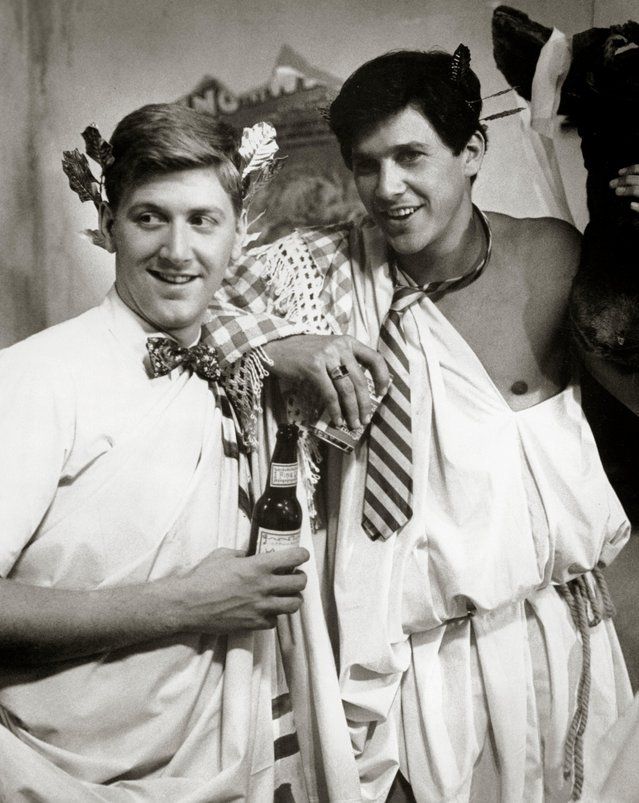
The most complex character in American cinematic history.
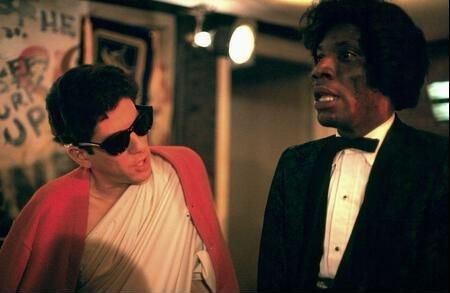
Douglas C. Neidermeyer, Membership Chairman, Omega Theta Pi

He discusses his inspiration for satire and the enduring appeal of “Animal House.”